Peregraf
Iran's Supreme Leader, Ayatollah Ali Khamenei, has characterized the United States' presence in Iraq as an "occupation" and urged the nation to "actively resist the US efforts to establish and expand its foothold in Iraq." Khamenei emphasized the necessity of bolstering the Popular Mobilization Forces (PMF) more than ever before. He asserted that it is in the best interest of the Islamic Republic of Iran to ensure the security and prosperity of Iraq.
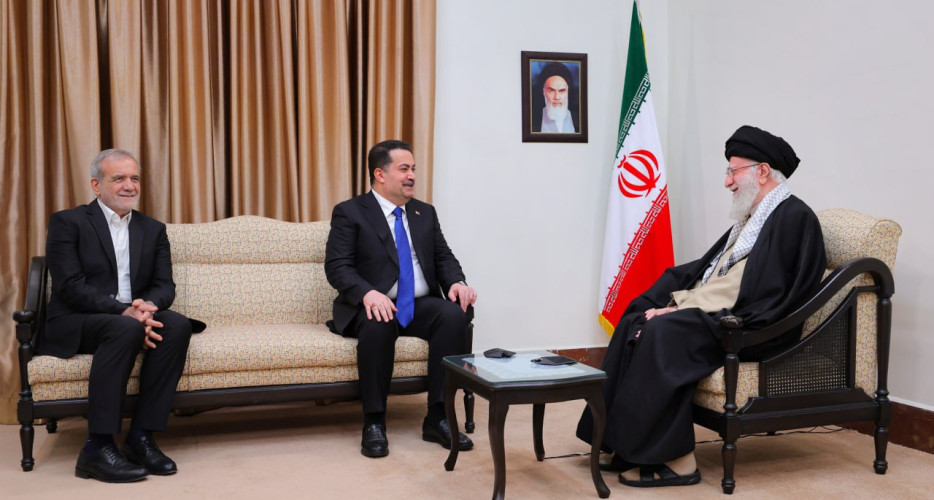
On January 8, 2025, Iraqi Prime Minister Mohammed Shia' Al Sudani arrived in Tehran for discussions with Iranian President Masoud Pezeshkian and Supreme Leader Ali Khamenei. According to Khamenei's official website, the Supreme Leader congratulated Al Sudani on his efforts to enhance prosperity and maintain security in Iraq, reiterating that it aligns with the interests of the Islamic Republic of Iran to foster stability and growth in the country.
The website further reported that Khamenei described the PMF as "a vital component of Iraq's forces" and advised the Iraqi Prime Minister that "greater emphasis should be placed on safeguarding and strengthening the PMF than in previous times." Khamenei also condemned the presence of US troops in Iraq as "illegal and detrimental to the interests of both the people and the government," stating, “Evidence indicates that the Americans are attempting to solidify their presence and stability in Iraq, which must be firmly opposed.”
The internal divisions among Iraq's Shiite political factions regarding Syria and the PMF signify a significant transformation that may influence the future of Iran-supported entities in Iraq. The Iraqi government and the PMF appear inclined towards establishing normalized relations with Syria's Hay'at Tahrir al-Sham (HTS), perceiving this as an unavoidable reality. Conversely, groups aligned with Iran are resistant to this development, apprehensive that it may diminish their authority within Iraq. As Baghdad progresses towards normalization, the fate of these armed factions remains uncertain, particularly as Washington exerts pressure on Iraq to disarm them as part of its overarching strategy. Recently, U.S. Secretary of State Antony Blinken made an unannounced visit to Baghdad. According to Bloomberg, during discussions with Prime Minister Al Sudani, Blinken urged him to prevent Tehran from utilizing Iraq as a conduit for the transfer of weapons and arms, while also advocating for the disarmament of Iran-affiliated armed groups in Iraq. Following Blinken's visit, Ibrahim al-Sumaida’i, an advisor to the Iraqi Prime Minister, cautioned in an interview, “If we don’t disarm these armed groups ourselves, others [Washington] will do so by force.” Just two days later, the advisor was compelled to resign from his position due to his remarks.
The discourse among Iraq’s Shiite factions is multifaceted: some contend that the presence of Iranian-backed groups exacerbates regional tensions within Iraq, while others argue that these groups are vital for the nation’s security, particularly in light of the escalating concerns regarding ISIS following the leadership changes in Syria. The origins of this debate can be traced back to the Syrian conflict, during which Iraq’s government, the PMF, and Iranian-backed armed groups were previously united in perceiving regime changes in Syria as existential threats to Iraq’s stability, especially given the fears of an ISIS resurgence in Syria under HTS control.
During early December, the prospect of regime change in Syria was perceived as a destabilizing factor for Iraq's borders and a potential resurgence of ISIS. The implication was unmistakable: Iraq could not establish normalized relations with a Syria led by HTS or governed by Ahmed Al-Sharaa (Jolani).
However, the situation has evolved significantly. The Iraqi government dispatched a high-level delegation to Syria, headed by the intelligence chief, to meet with Ahmed Al-Sharaa in Damascus, indicating a notable shift in Iraq's diplomatic approach. This visit faced considerable criticism from pro-Iranian factions within Iraq. Subsequently, the Iraqi Foreign Minister engaged in his inaugural diplomatic conversation with Syria's new counterpart, further solidifying Iraq's policy shift—a marked departure from previous commitments against normalizing relations with any new Syrian leadership following Assad's tenure.
The Popular Mobilization Forces (PMF), which had previously staunchly opposed regime change in Syria, have moderated their position. Hadi al-Amiri, a prominent figure within the PMF, asserted that Iraq cannot afford the destabilization of Syria, cautioning against the rise of HTS, which poses a threat to Iraq's stability, and advocated for intervention in Syria. Recently, however, al-Amiri indicated that Iraq's focus is not on Syria's future but rather on fostering a peaceful period under its new leadership, reflecting a more nuanced change in rhetoric.
Despite these evolving statements from both the Iraqi government and the PMF, Iran-aligned groups within Iraq continue to firmly oppose the new Syrian leadership, underscoring a widening divide within the Shiite alliance in Iraq, particularly among the government, PMF, and these factions.
This division within Iraq's Shiite community regarding Syria illustrates how the government and PMF are adjusting to the new Syrian landscape, while Iran-backed groups maintain their opposition. Intense discussions are ongoing concerning the future of Iran-backed armed groups in Iraq. This discourse has fragmented the Shiite alliance in Baghdad into two factions: one advocating for the disarmament of these groups to mitigate potential regional tensions, while the other expresses concern that such actions could leave Iraq vulnerable to a resurgence of ISIS, particularly in light of recent developments.
Baghdad is presently unable to disarm armed groups in Iraq that are supported by Iran. The magnitude of this year's commemorative events highlights the significant presence of the Axis of Resistance in Iraq, making it unlikely that such an initiative will occur in the near future.