Peregraf
With only a few days left to conduct the general census in Iraq, today a minister of the Kurdistan Regional Government (KRG) talks about the dangers of the census for the Kurds in the Kurdish disputed areas and calls for its postponement.
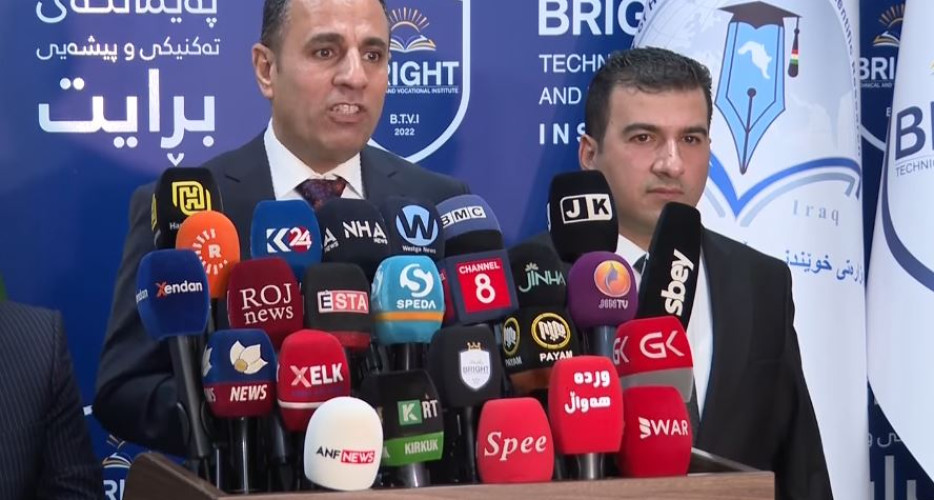
Fahmi Burhan, KRG Minister of Kurdish areas Outside the Kurdistan Region, said at a press conference in Sulaimaniyah "During the tenure of Rakan Jabbari, the acting governor of Kirkuk, many Arabs were brought to Kirkuk, and they will be counted in Kirkuk during the census."
As Fahmi Burhan pointed out there is no guarantee that imported Arab people will be returned to their places of origin and their case wille be exploited politically. He said “Our vision is not clear about the way the imported Arab people decide the fate of the city later or not?”
Another threat to the Kurds is the presence of many refugees from Kirkuk, Sinjar and Khanaqin in the Kurdistan Region who have not yet returned to their homes.
"More than 200,000 families in Kirkuk have left Sinjar due to the displacement and recently about 62,000 Yazidi families have left Sinjar. These are huge figures and cannot be ignored," Burhan said
The KRG Minister of Kurdish areas Outside the Kurdistan Region has called for the postponement of the census, he also called on the refugees from Kirkuk, Khanaqin, Sinjar, Dowz and Dibz to return to their areas during the census. "The Kurdistan Regional Government plans to facilitate this process," he said.
In the past, the KRG declared that it is suspicious of the upcoming census process in Iraq, including the presence of many refugees in the Kurdistan region, the presence of many imported Arabs in the Kurdish disputed areas and the fate of Article 140, with fears of using the census for political purposes.
"The KRG has been given clarity and assurances, but we as residents of the Kurdish isolated areas have not yet our hearts assured," Burhan said.
“Our goal was to conduct the census at a time when at least some of the principles of Article 140 would have been implemented and there would have been a more favorable political environment. Less than 80 percent of Iraqi citizens have national ID cards, all of them should have national ID cards,” said the KRG Minister of Kurdish areas Outside the Kurdistan Region.
Burhan stated, "While the KRG has received clarity and assurances, we, as inhabitants of the Kurdish isolated regions, still lack the reassurance in our hearts." He further emphasized, "Our intention was to carry out the census when a portion of the principles outlined in Article 140 had been enacted and when the political climate was more conducive. Currently, fewer than 80 percent of Iraqi citizens possess national ID cards, and it is imperative that all citizens obtain them." This was expressed by the KRG Minister responsible for Kurdish areas outside the Kurdistan Region.