IHEC Apologizes for Unresolved Fingerprint Issues in Kurdistan Parliamentary Elections
Peregraf
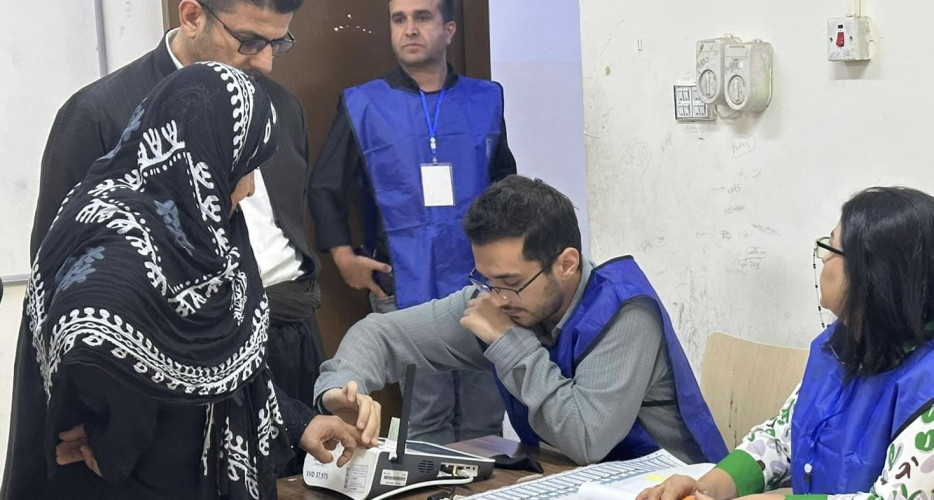
The Iraqi Independent High Election Commission (IHEC) has acknowledged ongoing challenges with fingerprint verification during the Kurdistan parliamentary elections, stating that two specific issues related to the matter remain unsolved.
Nabard Omar, head of the Kurdistan Elections Department within the IHEC, outlined the problems:
"There are two types of fingerprint-related issues. First, 5% of voting cards at each polling station—approximately 23 votes—are issued without fingerprints. Voters with these cards can still cast their ballots without fingerprint verification. This is due to a legal provision passed by parliament, and we are unable to address this issue.
Second, some individuals whose cards do have fingerprints face difficulties as the devices are unable to read them. This is not due to malfunctioning equipment, but rather issues with the voters’ fingerprints, which may be affected by illness or labor. Unfortunately, we cannot resolve this unless medical professionals or experts intervene."
"We have gained experience that for resolving the problem of unreadable fingerprints utilizing potatoes is more effective than employing lemons" Omar said.
As a result of these problems, hundreds of voters have been unable to participate in the election.
Jumana Ghalai, spokeswoman for the Iraqi High Election Commission (IHEC), told Peregraf that voter turnout in the Kurdistan Parliament elections stands at 31% until 12 p.m., with only four hours remaining before polls close at 6 p.m.
Kurdistan Region Parliament turnout figures until 12 p.m.:
• Erbil: 34%
• Sulaymaniyah: 29%
• Dohuk: 31%
• Halabja: 33%
Despite Erbil’s relatively higher turnout of 34%, voter engagement remains low overall, with Sulaymaniyah reporting the lowest participation at 29%. Election officials are urging citizens to cast their ballots before the closing time as the final hours tick down.
As of 7 a.m. today, 2,683,618 voters in the Kurdistan Region are eligible to cast their ballots. In the special voting process of security personnels held on October 18th, 208,521 voters participated.
The election will determine the 100 members of the Kurdistan Parliament, with 1,191 candidates vying for seats. A minimum of 30 seats will be allocated to women, while five seats are reserved for minority groups—three for Christians and two for Turkmen.
The elections are taking place across four constituencies, with the five seats designated for minority communities distributed among Erbil, Sulaymaniyah, and Duhok. The Christian community will be allocated three seats—one each in Erbil, Sulaymaniyah, and Duhok—while the Turkmen community will receive one seat in Erbil and one in Sulaymaniyah.
The distribution of Kurdistan parliamentary seats by province is as follows:
Erbil: 34 seats (including two for minorities)
Sulaymaniyah: 38 seats (including two for minorities)
Duhok: 25 seats (including one for minorities)
Halabja: 3 seats