Voting for the Kurdistan Parliament Continues, Fingerprint Issues Affect Some Voters
Peregraf
Voting for the Kurdistan Regional Parliament is underway, with the Chief of the Iraqi Independent High Election Commission (IHEC) stating that the process is proceeding smoothly. However, some voters are experiencing issues with the fingerprint recognition system, which is part of the voting procedure.
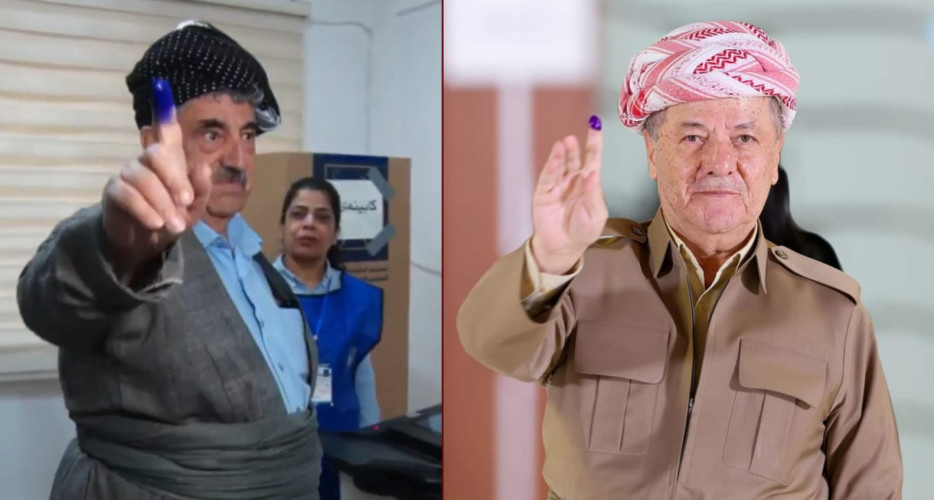
KDP President Massoud Barzani and Socialist Party leader Mohammed Haji Mahmoud encountered fingerprint scanning problems but were still able to cast their votes. The IHEC has introduced measures to address these issues, allowing staff to collect voting cards from affected voters and provide them with receipts to retrieve the cards after election day.
Mohammed Haji Mahmoud commented on his experience, explaining that his fingerprints were not readable. "I work every day, and they told me my fingers are tired. I'm a laborer and a farmer, so I use my hands daily," he told reporters.
At a press conference, IHEC Chief Judge Omar Ahmad confirmed that there were no significant technical difficulties and that the voting process was progressing as planned. "Once polling stations close at 6 p.m., all results will be sent electronically to the national office servers in Baghdad. We expect to announce the results within 24 hours, and hopefully even sooner," he said.
As of 7 a.m. today, 2,683,618 voters in the Kurdistan Region are eligible to cast their ballots. In the special voting process of security personnels held on October 18th, 208,521 voters participated.
The election will determine the 100 members of the Kurdistan Parliament, with 1,191 candidates vying for seats. A minimum of 30 seats will be allocated to women, while five seats are reserved for minority groups—three for Christians and two for Turkmen.
The elections are taking place across four constituencies, with the five seats designated for minority communities distributed among Erbil, Sulaymaniyah, and Duhok. The Christian community will be allocated three seats—one each in Erbil, Sulaymaniyah, and Duhok—while the Turkmen community will receive one seat in Erbil and one in Sulaymaniyah.
The distribution of Kurdistan parliamentary seats by province is as follows:
Erbil: 34 seats (including two for minorities)
Sulaymaniyah: 38 seats (including two for minorities)
Duhok: 25 seats (including one for minorities)
Halabja: 3 seats