Barzani marks referendum anniversary, emphasizing freedom's value and its high cost in life
Peregraf
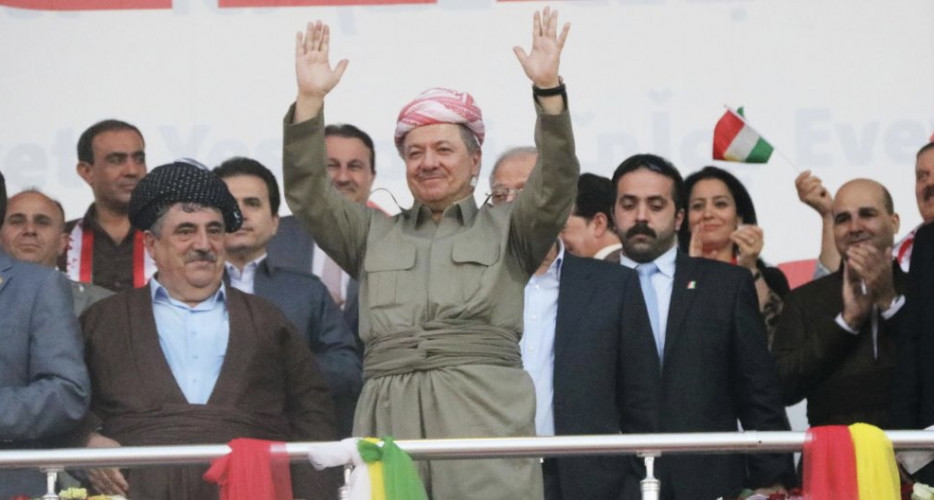
Masoud Barzani, a prominent advocate for the September 25, 2017 referendum in the Kurdistan Region, commemorated the seventh anniversary of this pivotal event by sharing a poem from the renowned Iraqi poet Mutanabbi and a discourse by the Lebanese intellectual Mikhail Naimy, both addressing themes of sovereignty, dignity, and freedom.
Mutanabbi's poem articulates, "If you strive for sovereignty and honor, do not settle for anything less than your aspiration."
Mikhail Naimy emphasizes, "Freedom is among the most precious aspects of life, thus it comes at a significant cost."
The decision to conduct the referendum initially polarized Kurdish political factions and society, a division that has persisted in its aftermath. Critics argue that the referendum was detrimental to Kurdistan, while proponents, particularly the Kurdistan Democratic Party (KDP), which championed the initiative, regard it as a significant and historic milestone, although efforts to address the referendum's outcomes have been deferred.
On the morning of September 25, 2017, the Kurdish populace was invited to respond to a question that had been met with considerable internal and external pressures and threats. The question posed was whether the Kurdistan Region and Kurdish-inhabited areas outside the region should become an independent state, with the options being a simple yes or no. Ultimately, over 92 percent of the Kurdish electorate responded affirmatively, and the results resonated globally.
In the lead-up to the referendum, the Kurdistan Region faced a challenging and tumultuous environment, with significant pressure on Kurdish leadership, particularly Masoud Barzani, to either delay or abandon the referendum. However, Barzani remained resolute in his decision to proceed.
The Iraqi government implemented a series of actions against the Kurdistan region following the referendum, which included the closure of airports and the establishment of a diplomatic embargo. Three weeks post-referendum, on October 16, military force was deployed in disputed territories, allowing the government to reclaim control over Kurdish-populated areas outside the Kurdistan region, especially Kirkuk.
During this period, the Kurdistan Region faced significant turmoil, resulting in the displacement of many individuals from the Kurdish disputed areas of Iraq, while the Peshmerga forces suffered numerous casualties. Supporters of the referendum, including the Kurdistan Democratic Party (KDP) and a faction of the Patriotic Union of Kurdistan (PUK) led by Kosrat Rasul Ali, regard the referendum as a fundamental right and a historic milestone. They contend that certain leaders within the PUK "betrayed" the referendum's outcomes by facilitating Iranian assistance to Iraqi forces, which enabled the recapture of Kirkuk and other Kurdish areas on October 16, 2017, and in the subsequent days.
Conversely, opponents of the referendum characterize it as an act of "treason," arguing that it resulted in the loss of half of Kurdistan's territory and the imposition of severe sanctions by the central government on the region.
Kurdish political parties have historically accused one another of treachery, particularly over the last fifty years, with each side defending itself while reciprocating the accusations.
In addition to the PUK and KDP, other significant Kurdish parties did not overtly endorse the referendum or engage in campaigning for it; however, officials from these parties expressed their support at the last moment, with the General Coordinator of Gorran stating that he voted in favor.
The PUK, similar to various other matters, became divided into two factions. Initially, during the early stages of the referendum, the party maintained that it would not endorse the referendum unless it was conducted in Kurdish-populated areas outside the Kurdistan Region. However, as the date of the polling drew nearer, the party altered its stance, advocating for the exclusion of the disputed Kurdish areas from the referendum. This request was ultimately denied, leading the PUK to officially declare its acceptance of international community initiatives aimed at postponing the referendum.
Concurrently, the "No Now movement," spearheaded by Shaswar Abdulwahid, advocated for either a postponement or a rejection of the referendum.
Supporters of the "No to referendum" campaign were labeled as "traitors" by certain ruling parties; however, they asserted that voicing their opinions was their fundamental right and characterized themselves as loyal individuals to Kurdistan who were dissatisfied with the current governance. They now claim that their predictions regarding the reactions to the referendum have materialized.
Iran and Turkey, as neighboring countries with vested interests in the Kurdistan Region, expressed strong opposition to the referendum, exerting various threats and pressures on the Kurdish population to withdraw from the process. While Turkey refrained from acting on its threats, Iran took a more aggressive approach.
Qasem Soleimani played a pivotal role in Iran's involvement in Iraq, maintaining significant connections with the Kurds, particularly the PUK. Masoud Barzani resisted the pressures and threats posed by Qasem Soleimani. In retaliation to the referendum, Soleimani executed the threats he had previously communicated to Kurdish officials.
In addition to these two nations, the international community, notably the United States, Britain, France, and the United Nations, made concerted efforts to persuade Masoud Barzani to delay the referendum, offering an "alternative" solution. However, Barzani rejected this alternative and sought guarantees.
Regarding the Iraqi stance, the Iraqi Federal Court has declared the referendum unconstitutional; however, the Kurdistan Region has not formally recognized this annulment. The Prime Minister of the Kurdistan Region has stated a commitment to respect the court's ruling. In contrast, the Kurdistan Parliament and former President Masoud Barzani maintain that no entity possesses the authority to nullify the referendum.