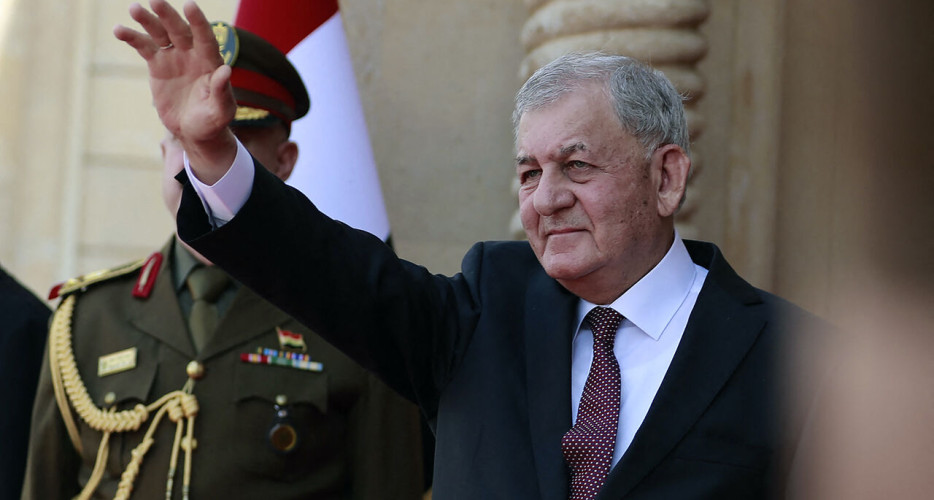
Peregraf — Incumbent President Abdul Latif Rashid has withdrawn his candidacy as Iraq’s parliament convened on Saturday to elect a new head of state, deepening political uncertainty over the formation of the next government.
An Iraqi lawmaker told Peregraf that 223 members of parliament were present at the start of the session, surpassing the required quorum of 166 lawmakers. Despite meeting the constitutional threshold to proceed, the session is being boycotted by the Kurdistan Democratic Party (KDP) and former Prime Minister Nouri al-Maliki’s State of Law Coalition, underscoring deep political divisions.
The Kurdish contest for the presidency reflects similar fragmentation. The Patriotic Union of Kurdistan (PUK) has nominated Nizar Amedi, while the KDP has put forward Fuad Hussein. Despite ongoing discussions, no agreement has been reached between the rival Kurdish parties.
Under Iraq’s constitutional framework, electing a president requires a two-thirds majority—at least 220 votes—making broad consensus essential. Rashid’s withdrawal further complicates efforts to reach that threshold as rival blocs remain divided.
The political impasse extends beyond the presidency. Shiite factions are still split over the nomination of a prime minister, delaying the broader government formation process. The president plays a pivotal role in this process, as they are constitutionally mandated to designate the largest parliamentary bloc to form the next cabinet.
Tensions have also been exacerbated by international dynamics. Donald Trump has reportedly opposed Maliki’s potential return to power, citing concerns over his ties to Iran—adding an external dimension to Iraq’s already complex political deadlock.
The urgency of the situation is heightened by missed constitutional deadlines. Parliament was originally required to elect a president by February 1, but repeated attempts have failed due to lack of quorum and persistent political disagreements.