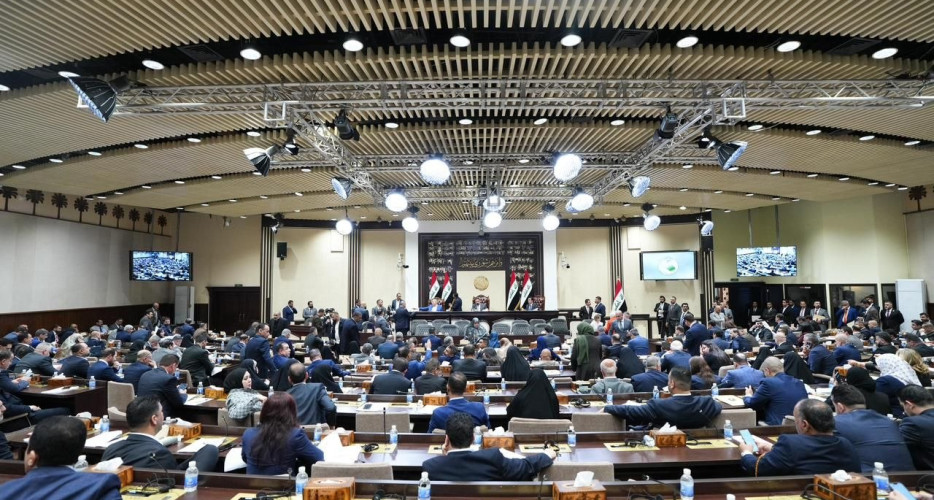
Peregraf — The Kurdistan Democratic Party (KDP) has formally expressed disapproval of the agenda for Saturday's Iraqi parliament session designated to elect the President of the Republic, deepening political divisions one day before the scheduled vote.
In a statement, , KDP official and Second Deputy Speaker of the Council of Representatives, said the party rejects the session's agenda due to the absence of "national and political consensus" on key electoral milestones. He stressed that the presidency represents the unity of the country and constitutional protection, and warned against what he described as a policy of imposing a fait accompli.
Atrushi called for further dialogue among political leaders to reach consensus on a presidential candidate "who enjoys wide national acceptance," while also pointing to unresolved disagreements over the nomination of the next prime minister — describing it as the most important position in running the state and the political process. "It is our right to be informed of the nominated individual and to have a say in this nomination," the statement read.
With one day remaining before parliament convenes, the KDP's stance raises fresh uncertainty over whether the session will proceed as planned. The presidency — traditionally held by a Kurdish figure under Iraq's post-2003 power-sharing arrangement — remains contested between the KDP and the Patriotic Union of Kurdistan (PUK), which have yet to agree on a unified candidate.
Despite the KDP's position, the PUK has signaled confidence ahead of the vote. Dilan Ghafour, spokesperson for the PUK parliamentary bloc, told Peregraf that her party intends to attend the session. "On Saturday, we will attend the parliamentary session to elect the President. We are optimistic that our candidate will secure the necessary votes and that we will win the position," she said, adding that there is strong political will to proceed.
More than 230 lawmakers have signed a request calling for the vote to take place, with all Kurdish parties backing the move except the KDP — highlighting the ongoing rift between the two dominant Kurdish factions.
According to information obtained by Peregraf, no meaningful progress has been made in bridging differences between the KDP and PUK, and no agreement has been reached on a joint nominee.
Parliament Speaker Haibat al-Halbousi has urged all lawmakers to attend the April 11 session, warning that the names of absent members will be publicly disclosed.
The vote follows a March 30 meeting of parliamentary leaders and political blocs, where it was agreed to hold a dedicated session to elect the president in an effort to break a prolonged political deadlock. Under Iraq's constitution, the president — once elected — tasks the nominee of the largest parliamentary bloc with forming the next government.
Divisions, however, extend beyond the presidency. Shia political factions remain divided over the prime minister's position, with ongoing disagreements over potential candidates. Former Prime Minister Nouri al-Maliki remains a contentious figure amid reported international concerns about his candidacy.
Procedurally, the session requires a quorum of at least 166 lawmakers, while a presidential candidate must secure at least 220 votes — thresholds that make broad cross-party support essential.