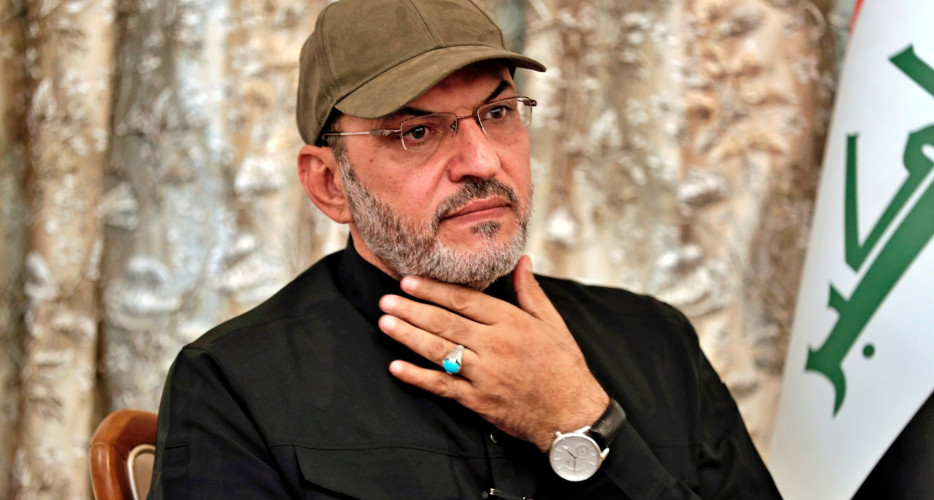
Peregraf — Abu Alaa al-Walai, Secretary-General of Kata’ib Sayyid al-Shuhada, an Iraqi armed group aligned with Tehran, has issued a warning of potential regional escalation involving Syria and Kuwait as the US–Israel war on Iran enters its 33rd day.
In a statement released amid intensifying hostilities, al-Walai stated the conflict has entered a "more dangerous phase," accusing Washington of failing to achieve its declared objectives and warning of a shift toward a broader war.
Al-Walai warned that any use of Kuwaiti territory by U.S. forces as a launching point for strikes against Iran would be considered a breach of regional security boundaries.
"In the event that American forces use Kuwaiti territory as a base for aggression against the Islamic Republic, the ‘Axis of Resistance’ will treat this as a violation of regional borders under the framework of the ‘Unity of Fronts,’" al-Walai said.
He also referenced reports concerning Abu Mohammad al-Jolani, the leader of Hay'at Tahrir al-Sham, alleging preparations to move forces toward Lebanese territory in a manner that could support Israeli operations. Al-Walai framed such a move as another trigger for escalation.
According to al-Walai, either scenario would prompt a direct response from the “Axis of Resistance,” based on what he described as a “tit-for-tat” doctrine.
"An eye for an eye, a tooth for a tooth," he said, warning that reciprocal actions would follow any perceived breach of regional lines.
Rising Tensions Along the Syria–Iraq Border
The warning comes as security concerns intensify along the Syria–Iraq border. On March 30, the Syrian Arab Army reported that a large-scale drone attack targeted multiple military positions near the Iraqi border at dawn. According to Syrian state media, air defenses intercepted the majority of the incoming drones in what was described as a coordinated assault.
In a statement, the Syrian Army’s Operations Directorate said its forces engaged "a number of drones" targeting several positions in eastern Syria. While the exact number of drones and the extent of damage were not disclosed, officials claimed most were neutralized.
"We are studying our options and will deliver an appropriate response to neutralize any threat and prevent any aggression against Syrian territory," the statement said.
The incident marks the latest escalation in a region where Syrian government forces, the Kurdish-led Syrian Democratic Forces (SDF), and multiple armed groups operate in close proximity to Iraqi territory.
Cross-Border Accusations and Strategic Sensitivities
The latest developments follow an earlier cross-border incident on March 23. Sipan Hamo—referred to by local sources as Deputy Defense Minister for Northern and Eastern Syria and a senior commander in the Syrian Democratic Forces (SDF)—claimed Iraqi territory was used to launch missiles targeting the Kharab al-Jir base in al-Hasakah province.
Hamo stated the strike caused material damage but no casualties. He asserted that Iraqi authorities are "fully and directly responsible" for failing to prevent such attacks and called on Baghdad to take "immediate and effective action" to protect the border.
The Kharab al-Jir base, located in the Rmeilan area, has historically hosted U.S. forces and remains a central operational hub for the SDF. No group has claimed responsibility for either the March 23 missile strike or the March 30 drone attack.
Risk of Broader Escalation
Together, these developments highlight concerns over the use of Iraqi territory as a launch point for cross-border attacks, raising the risk of broader regional confrontation.
Al-Walai’s warning suggests that any expansion of the conflict—whether through new fronts in Kuwait or maneuvers involving Jolani’s forces—could trigger retaliatory actions across multiple theaters. As the US–Israel war on Iran enters its 33rd day (calculated from the February 28 commencement), regional actors continue to signal readiness to respond if "red lines" are crossed.