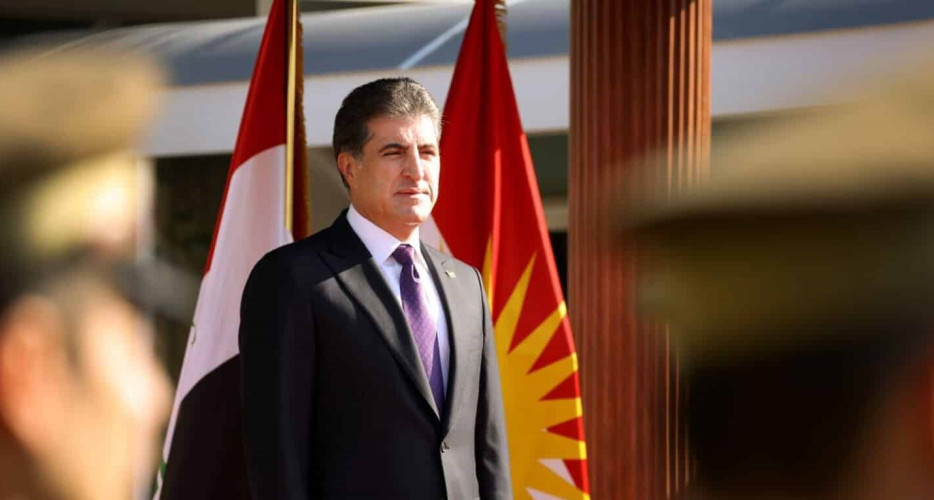
Peregraf — A second drone attack in less than 24 hours has targeted the residence of Kurdistan Region President Nechirvan Barzani in Duhok, according to a source near the location who spoke to Peregraf. The sound of drones was still audible over the city at the time of reporting, raising concerns about an ongoing aerial threat.
The latest incident follows an earlier drone strike that occurred at approximately 11:16 AM on the same day. Footage from the first attack shows security forces engaging the drone with heavy automatic gunfire in an attempt to intercept it. The engagement was followed by a large explosion and a plume of white smoke rising from the targeted property, confirming the impact.
In response, Iraqi Prime Minister Mohammed Shia' al-Sudani condemned the attack during a phone call with Barzani, describing it as a "blatant attack" on the President’s residence. He announced the formation of a joint security and technical committee comprising federal Iraqi forces and Kurdistan Regional Government (KRG) security agencies.
According to a statement from the Prime Minister’s office, the committee has been tasked with investigating the technical aspects of the strike, identifying those responsible, and initiating legal proceedings. Al-Sudani emphasized his government’s determination to prevent any "outlaw entity"—whether domestic, regional, or international—from dragging Iraq into the broader regional conflict.
While Baghdad has moved quickly to respond, the Kurdistan Region Presidency has not yet issued a detailed public statement regarding the second strike or the attempted interception during the first attack.
International reactions have also followed. French President Emmanuel Macron condemned the attack in a phone call with Barzani, reaffirming France’s support for the Kurdistan Region and Iraq amid rising regional tensions.
Meanwhile, the Islamic Revolutionary Guard Corps (IRGC) issued a statement condemning the drone strike, describing it as a "terrorist act" carried out by "aggressive enemies." The group linked the incident to what it described as a broader pattern of destabilizing operations in the region.
In its statement, the IRGC accused "terrorist American and Zionist forces" of contributing to regional instability and claimed the attack was intended to undermine cooperation between the Kurdistan Region and neighboring countries. It also signaled readiness to "defend the security of its neighbors" and proposed the creation of a collective regional defense framework.
The back-to-back drone incidents mark a significant escalation in security threats targeting high-level leadership in the Kurdistan Region, as investigations continue and concerns mount over the potential for further attacks.