Peregraf — Iraq’s long-stalled political process showed signs of renewed urgency on Friday, as more than 200 lawmakers signed a petition to convene parliament for a presidential election, even as deep divisions among Kurdish and Shiite factions continue to paralyze the formation of a new government.
Dilan Ghafour, a lawmaker from the Patriotic Union of Kurdistan, told Peregraf, more than 220 members of parliament had endorsed a request to hold a session on March 30 to elect a president — a step widely seen as essential to unlocking the broader political impasse. She added that All Kurdish factions signed the petition except the Kurdistan Democratic Party. underscoring persistent fractures within the Kurdish bloc.
Under parliamentary rules, only 50 signatures are needed to place the presidential vote on the agenda. But holding the session requires a two-thirds quorum of 166 lawmakers, and electing a president demands at least 220 votes — thresholds that have repeatedly thwarted earlier attempts.
"The situation in Iraq and the wars and tensions in the region necessitate the election of a new president," Ghafour said, adding that the move would allow the president to designate a prime minister tasked with forming a new cabinet.
That next step has become increasingly contentious.
Under Iraq’s political system, the president nominates a prime minister from the largest parliamentary bloc. But Shiite factions, which dominate parliament, remain sharply divided over who should assume the post. Their disagreement has intensified after U.S. President Donald Trump rejected the candidacy of Nouri al-Maliki, the Coordination Framework’s initial nominee, citing concerns over his ties to Iran.
The American opposition has reverberated across Iraq’s political landscape. Iraqi officials say Washington has warned of possible sanctions tied to the selection of the next prime minister and has pressed for broader reforms, including curbing the influence of armed groups outside state control. The intervention has further fractured Shiite ranks, with some allies of Prime Minister Mohammed Shia al-Sudani reconsidering their support for Mr. al-Maliki.
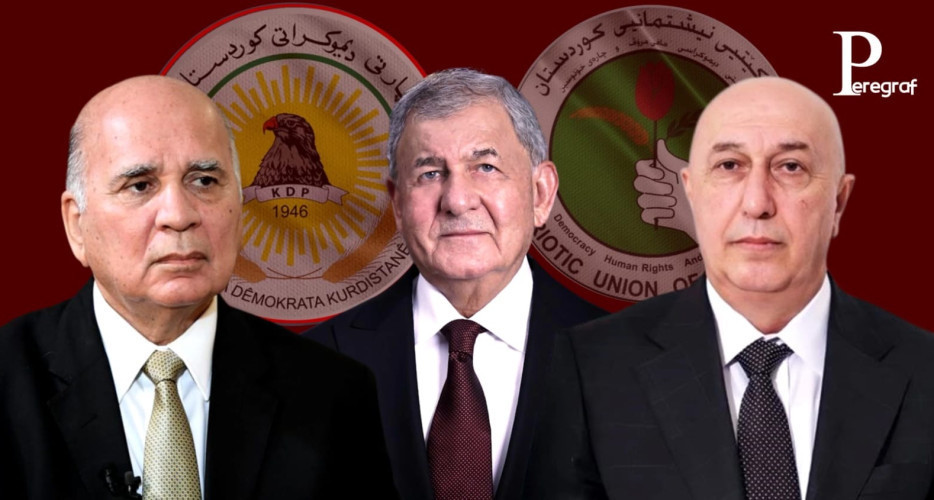
Meanwhile, the presidency — traditionally held by a Kurdish figure under Iraq’s post-2003 power-sharing arrangement — has become another arena of rivalry. The incumbent, Latif Rashid, is seeking a second term. The Patriotic Union of Kurdistan has nominated Nizar Amedi, while the Kurdistan Democratic Party has put forward Fuad Hussein.
The stakes are heightened by missed constitutional deadlines. Parliament was required to elect a president by February 1, but repeated sessions collapsed for lack of quorum. Shiite blocs have warned that if Kurdish factions boycott future sessions, they too will abstain — a dynamic that virtually guarantees continued paralysis.
The impasse has effectively frozen Iraq’s entire political system. Without a president, no prime minister can be formally appointed, and without a government, key policy decisions remain in limbo.
Legal uncertainty is also mounting. A pending interpretation from Iraq’s Federal Supreme Court is expected to clarify whether the current caretaker arrangements can continue or whether alternative constitutional mechanisms must be invoked.
For now, Iraq remains caught between internal rivalries and external pressures. While political leaders publicly project confidence, the competing interests of domestic factions and foreign powers — particularly Washington and Tehran — continue to shape the outcome.
Whether Monday’s proposed session will break the deadlock or simply extend it may determine not only the next government, but the stability of Iraq’s fragile political order.