Zaidan Warns Iran-Backed Militias Undermine State Authority as Iraq Faces Escalating Attacks
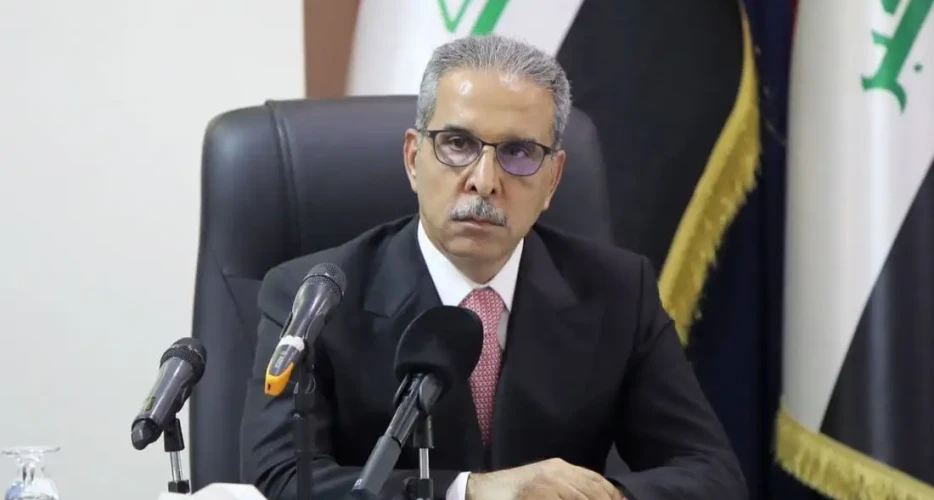
Peregraf — Faiq Zaidan, President of Iraq’s Supreme Judicial Council, has issued a stark warning against Iran-backed armed factions, declaring that their unilateral military actions amount to an unconstitutional challenge to state authority and risk dragging the country into wider conflict.
In a detailed legal article published Friday, Zaidan stressed that the power to declare war or a state of emergency rests exclusively with Iraq’s constitutional institutions. He emphasized that such a decision requires a joint request from the President of the Republic and the Prime Minister, followed by approval from a two-thirds majority in Parliament — a threshold designed to ensure broad national consensus.
Zaidan’s remarks come amid a surge in attacks by Iran-aligned militias, operating under the banner of the “Islamic Resistance in Iraq,” which have targeted sites across the country, including the Kurdistan Region, the U.S. Embassy in Baghdad, and Baghdad International Airport. The escalation follows the outbreak of a regional war involving the United States, Israel, and Iran on February 28, intensifying pressure on Baghdad to assert control over armed groups.
“The declaration of war is among the most serious sovereign decisions and cannot be taken individually or arbitrarily,” Zaidan wrote, warning that attempts by armed factions to act independently constitute a “grave violation of the Constitution” and threaten both state sovereignty and democratic governance.
He cautioned that such actions create “multiple centers of military decision-making,” fueling instability and increasing the risk of Iraq being pulled into internal or regional conflicts without public or institutional consent. The proliferation of weapons outside state control, he added, heightens the danger of internal armed clashes and deepens legal and security chaos.
Zaidan also underscored the political consequences, noting that militia-led escalation bypasses elected institutions and erodes public trust in the state. “Unofficial decisions regarding war may expose Iraq to international isolation or sanctions,” he warned, highlighting the broader diplomatic risks.
His intervention follows a series of high-profile attacks attributed to Iran-backed groups. On March 21, a drone strike targeted the headquarters of Iraq’s National Intelligence Service in Baghdad, killing one officer. Mohammed Shia' al-Sudani condemned the incident as a “terrorist act” and a direct assault on state institutions.
Despite repeated government pledges to bring all weapons under state control, powerful militias continue to operate with significant autonomy. This divergence has become increasingly visible in Iraq’s foreign policy messaging.
On March 27, Baghdad sought to reassure Gulf states and Jordan, reaffirming its rejection of attacks launched from Iraqi territory and pledging adherence to constitutional and legal frameworks. However, this position was sharply contradicted by rhetoric from Iran-aligned factions, including Kataib Sayyid al-Shuhada, whose leadership issued defiant statements challenging regional governments and framing Iraq as a stronghold of the “Resistance.”
The conflicting signals have raised alarm among regional partners. Gulf countries — including the United Arab Emirates, Saudi Arabia, Qatar, Kuwait, and Bahrain — alongside Jordan, have called on Iraq to take decisive action to halt attacks originating from its territory. They warned that continued militia activity violates international law and could provoke further escalation.
Zaidan concluded by emphasizing that restricting arms to the state and reinforcing constitutional institutions are essential steps to preserving Iraq’s stability. Without this, he warned, the country risks sliding deeper into insecurity, political fragmentation, and regional confrontation driven by actors operating outside the law.