Iraq Sends Mixed Signals to Gulf and Jordan: Government Reassures, Militias Escalate
Peregraf — Iraq has delivered sharply contrasting messages to Gulf states and Jordan, as Baghdad seeks to reassure its neighbors amid mounting regional tensions, while an Iran-backed militia issued a provocative response that underscores ongoing challenges to state authority.
In an official statement, Iraq’s Ministry of Foreign Affairs reaffirmed the government’s “firm rejection of any attack” targeting Gulf Arab countries and the Hashemite Kingdom of Jordan, stressing that the security of neighboring states is “an integral part of Iraq’s national security.” The ministry emphasized Baghdad’s commitment to a balanced foreign policy, regional cooperation, and efforts to reduce tensions.
The statement also underscored Iraq’s rejection of using its territory as a launchpad for attacks against other countries, pledging that authorities are taking “all necessary measures” to address security threats in accordance with the constitution and the law. Iraqi officials highlighted ongoing coordination with regional partners and expressed readiness to investigate any evidence of attacks originating from Iraqi soil.
The government further reiterated its support for diplomatic solutions to end the ongoing regional conflict and prevent further escalation, warning of the broader economic and humanitarian consequences of continued instability.
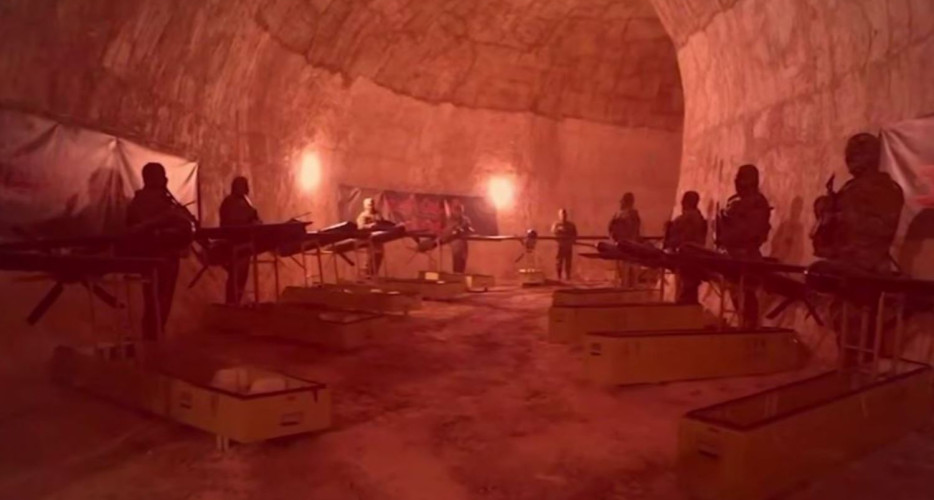
However, this conciliatory tone was starkly contradicted by rhetoric from Kataib Sayyid al-Shuhada, an Iran-aligned Iraqi armed group. Its Secretary-General, Abu Alaa al-Walai, issued a defiant message directed at Gulf governments and Jordan, mocking their appeals and portraying Iraq as a stronghold of the “Resistance.” He accused Gulf states of aligning with the United States and Israel, claiming they bear responsibility for prolonging regional conflicts.
The dual messaging comes in response to a joint statement by Gulf countries—including the United Arab Emirates, Saudi Arabia, Qatar, Kuwait, and Bahrain—alongside Jordan, calling on Iraq to take “necessary measures” to immediately halt attacks launched from its territory by Iran-backed factions.
The coalition condemned what it described as “blatant Iranian attacks” carried out directly or through proxy groups, warning that such actions violate international law and threaten regional stability. The statement also invoked the right to self-defense under Article 51 of the UN Charter and cautioned that further measures could be taken to protect national sovereignty.
Tensions have intensified since the outbreak of the war involving the United States, Israel, and Iran on February 28, 2026. Now in its 27th day, the conflict has seen a surge in attacks by the so-called Islamic Resistance in Iraq, targeting sites including the Kurdistan Region, the U.S. Embassy in Baghdad, and Baghdad International Airport.
On March 21, a drone strike hit the headquarters of Iraq’s National Intelligence Service in Baghdad, killing one officer. Prime Minister Mohammed Shia' al-Sudani condemned the attack as a “terrorist act” and a direct violation of state institutions.
Despite repeated pledges by Baghdad to bring all weapons under state control, powerful armed factions continue to operate with significant autonomy. The divergence between official policy and militia rhetoric highlights Iraq’s ongoing struggle to assert full control over armed groups, raising concerns among regional partners about the risk of further escalation.