U.S. Secretary Rubio Calls KRG Premier Barzani to Offer Condolences After Deadly Iranian Strike on Peshmerga
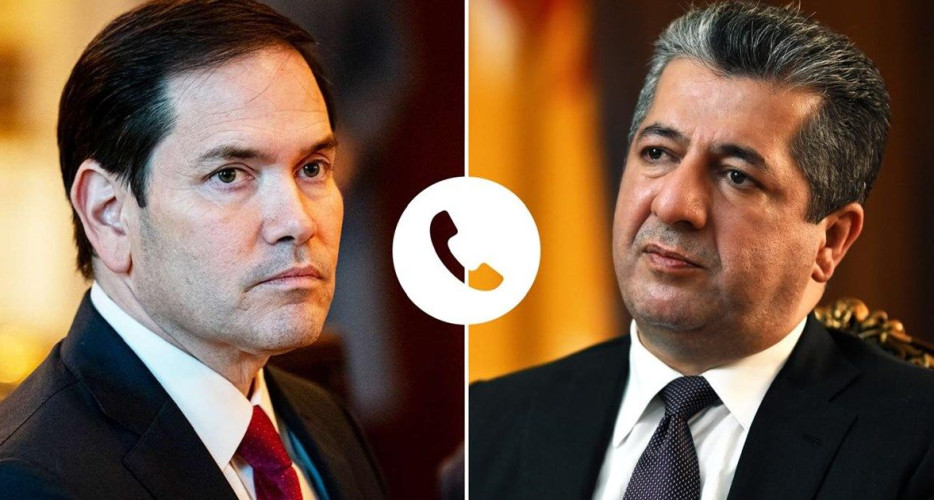
Peregraf — Marco Rubio held a phone call Thursday with Masrour Barzani to express condolences following a deadly Iranian missile attack that killed six Peshmerga fighters, while strongly condemning ongoing attacks by Iran and its allied militias in Iraq.
According to a statement attributable to U.S. State Department Principal Deputy Spokesperson Tommy Pigott, Rubio extended his sympathies to the families of those killed in the March 24 strike and wished a speedy recovery to the wounded.
The Secretary also “strongly condemned the continued attacks by Iran and Iran-aligned Iraqi terrorist militias against U.S. citizens and energy infrastructure across Iraq,” underscoring Washington’s growing concern over escalating violence.
During the call, Rubio reaffirmed the United States’ continued support for the Kurdistan Region and its Peshmerga forces. He also expressed appreciation to the Kurdistan Regional Government for facilitating the flow of Iraqi oil—including from the Kurdistan Region—to global markets.
Prime Minister Barzani thanked Rubio for the call and his message of solidarity. The two sides also discussed broader issues, including relations between the Kurdistan Regional Government and Iraq’s federal authorities, as well as ongoing economic challenges.
The call follows a deadly missile attack earlier this week, when Iranian ballistic missiles struck Peshmerga positions in two waves. According to the Kurdistan Regional Government’s Ministry of Peshmerga, the strikes targeted the headquarters of the 7th Infantry Division under Command Area One and a unit from the 5th Infantry Division.
At least six Peshmerga fighters were killed and around 30 others wounded, marking one of the deadliest attacks on Kurdish forces in recent months.
Officials in the Kurdistan Region condemned the strikes as a violation of Iraqi sovereignty and good neighborly relations, calling on Baghdad and the international community to take firm action to prevent further escalation.
The incident comes amid heightened regional tensions tied to the ongoing conflict involving the United States, Israel, and Iran, which began on February 28, 2026. Analysts warn that continued escalation risks drawing the Kurdistan Region into a broader conflict despite its stated neutrality.