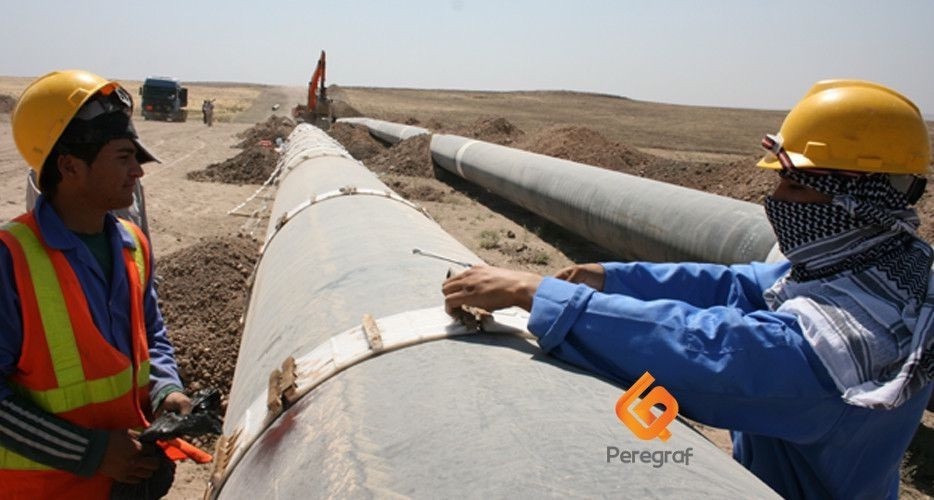
Peregraf- Baghdad has threatened to take legal measures against the Kurdistan Regional Government (KRG), insisting that, under the Iraq–Turkey Pipeline (ITP) agreement, the export route is a federal government facility under its authority.
In a sharply worded statement issued on Tuesday, Iraq’s oil ministry criticised the KRG’s refusal to resume exports through the northern pipeline, describing its position as “purely political” and lacking legal and professional basis.
The escalation comes as federal authorities move closer to restarting flows through the Kirkuk–Ceyhan pipeline, a key export artery that has been offline amid technical and political disputes.
Push to resume exports
Baghdad said rehabilitation work on the pipeline is nearing completion, with exports expected to resume within days. The ministry outlined plans to initially ship up to 250,000 barrels per day (bpd) from Kirkuk via a temporary link between Sarlowa and Fishkhabour.
If combined with production from fields in the Kurdistan Region, total exports could reach roughly 450,000 bpd, according to the ministry.
Officials argue that restoring northern exports would help mitigate the impact of regional instability and disruptions affecting shipments through the Strait of Hormuz.
The ministry also noted that Turkey has shown “openness” to resuming flows, while highlighting longer-term plans to build additional pipeline capacity to strengthen federal export routes.
Legal and constitutional dispute
At the core of the standoff is a longstanding dispute over control of oil resources.
Baghdad maintains that the Iraq–Turkey pipeline is a sovereign federal asset, citing constitutional provisions that define oil and gas as the property of all Iraqi citizens and place overall policy under federal jurisdiction.
The ministry accused the KRG of violating the constitution and ignoring rulings by Iraq’s federal supreme court that reinforce central government authority over oil management and exports.
It warned that continued obstruction could prompt legal escalation.
KRG conditions rejected
Federal officials also criticised the KRG for linking the resumption of oil exports to unrelated issues, including the payment of public sector salaries and the implementation of customs reforms such as the ASYCUDA system.
Baghdad said these matters fall under the jurisdiction of other institutions, particularly the finance ministry, and should not be tied to export operations.
Rising economic and political stakes
The dispute has intensified as Iraq faces growing pressure on its oil-dependent economy.
Earlier this week, oil minister Hayan Abdul-Ghani said Baghdad plans to begin exporting crude directly from Kirkuk to the Turkish port of Ceyhan within a week, bypassing infrastructure controlled by the KRG.
The proposal followed emergency discussions aimed at maintaining export volumes after disruptions to southern routes, underlining the urgency of securing alternative channels.
The KRG has rejected Baghdad’s characterisation, citing security risks and financial pressures affecting production in the region.
Parliamentary intervention sought
In its latest statement, Baghdad called on parliament to intervene, describing the impasse as economically damaging and politically risky at a sensitive moment.
Lawmakers were urged to prioritise national interests and address what the ministry described as actions undermining trust and placing pressure on Iraq’s finances.
Broader implications
The standoff underscores deep-rooted tensions between Baghdad and Erbil over resource governance, revenue sharing and constitutional authority—issues that have repeatedly disrupted northern exports.
With regional instability threatening key export routes and Iraq heavily reliant on crude revenues, the outcome of the dispute could have significant implications for both the country’s economy and global oil markets.