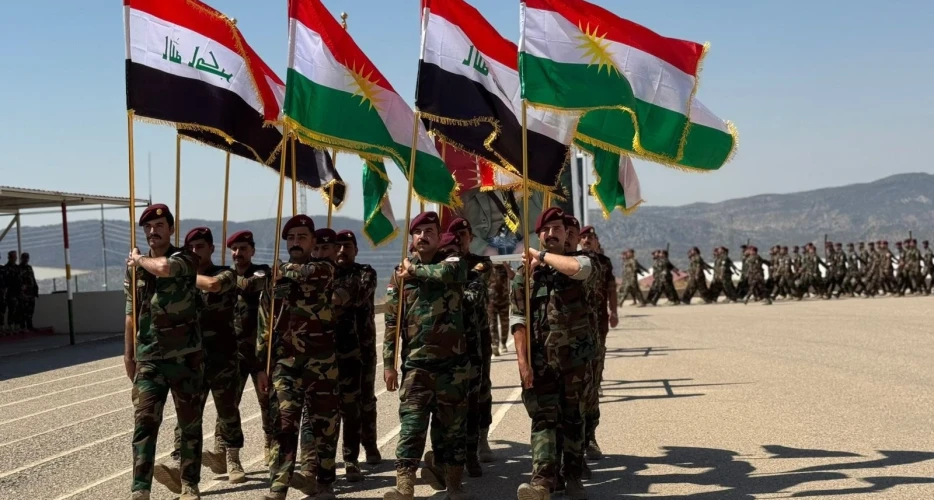
Peregraf — Masrour Barzani has signed a directive to further the consolidation of the Peshmerga into a unified force, according to a statement from Peshawa Hawramani, spokesperson for the Kurdistan Regional Government (KRG).
The move is apparently "part of the reform agenda prioritized by the KRG’s ninth cabinet, which focuses on restructuring the Peshmerga along institutional, non-partisan lines". Under the new order, Barzani approved the transfer of administrative, financial, legal, and communications authorities to sector commands within the Ministry of Peshmerga Affairs. This decision aims to strengthen command structures and expedite the unification of units currently divided by political affiliations.
Hawramani stated that this step aligns with ongoing coordination between the KRG, the Ministry of Peshmerga, and the International Coalition, which have long advocated for a professionalized, national force. The statement noted that the decision reflects a commitment to the institutional reform of the region's security apparatus.
Persistent Structural Challenges
Despite this recent move, the unification process continues to face significant hurdles. A July 2025 report from the U.S. Department of State Office of Inspector General noted that political rivalries, financial constraints, and slow integration remain primary obstacles.
While formal agreements are in place, Peshmerga units remain largely partitioned. The majority of forces are divided between Unit 80, affiliated with the Kurdistan Democratic Party (KDP), and Unit 70, affiliated with the Patriotic Union of Kurdistan (PUK).
A 2022 Memorandum of Understanding (MoU) between the United States and the KRG serves as the framework for these reforms. It established a four-year roadmap to integrate partisan units under the singular command of the Ministry of Peshmerga Affairs, with the goal of reducing political interference.
International Support and Regional Realities
Since 2016, the U.S. and European partners have provided training, funding, and equipment to the Peshmerga, particularly for counter-ISIS operations. However, this support is increasingly conditional. Coalition assistance, including financial stipends, is primarily directed toward brigades that have successfully integrated into the Ministry's formal structure.
Analysts suggest that the deep-seated rivalry between the KDP and PUK remains the most significant barrier to reform, as both parties maintain control over their respective armed wings. The U.S. oversight report emphasized that successful reform requires broader restructuring of Kurdistan’s internal security sector and a substantial reduction in partisan control over armed units to ensure long-term regional stability.