Talabani Signals Readiness on Presidency as Mohammed Shia’ al-Sudani Coalition Pressures Kurds
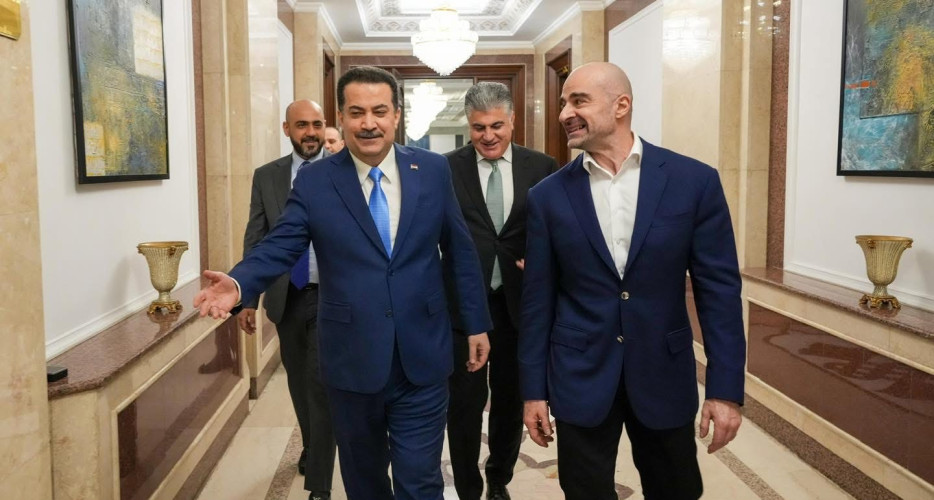
Peregraf — Bafel Talabani, President of the Patriotic Union of Kurdistan (PUK), reaffirmed his party’s readiness to proceed with the election of Iraq’s president during a meeting with Prime Minister Mohammed Shia’ al-Sudani today in Baghdad, as pressure mounts on Kurdish factions to break the ongoing political deadlock.
According to a statement from Talabani’s office, the meeting focused on Iraq’s evolving political landscape and broader regional dynamics, alongside the urgent need for coordination among political forces. Both sides stressed that cooperation remains essential to overcoming the current impasse and advancing the country’s governance process.
A key outcome of the discussions was the emphasis on completing constitutional requirements, particularly the election of the President of the Republic and the formation of a new federal government. Talabani reiterated that the PUK is fully prepared to move forward, underscoring the importance of establishing a “strong, service-oriented government” capable of delivering for all Iraqi citizens.
The meeting comes as the Reconstruction and Development Coalition, led by al-Sudani, intensifies its calls on Kurdish political parties to agree on a unified presidential nominee. The coalition has warned that continued delays—now approaching two months since the election of the parliamentary speaker—constitute a breach of constitutional timelines and risk deepening institutional paralysis.
Under Iraq’s post-2003 political framework, the presidency is traditionally held by a Kurdish figure, placing responsibility on Kurdish parties to reach consensus on a candidate. However, internal divisions have so far prevented agreement, stalling the completion of the government formation process.
Al-Sudani’s coalition has urged the Council of Representatives to convene an urgent session dedicated to electing a president, stressing that restoring constitutional order is essential to reactivating state institutions. It also called directly on Kurdish factions to finalize their nominee ahead of any upcoming parliamentary vote.
The coalition warned that the continuation of a caretaker government with limited authority is already impacting public services and weakening institutional performance. It further signaled that, should the deadlock persist, it may pursue constitutional measures to resolve the crisis.
Talabani’s statement of readiness signals a potential opening for progress, but it remains unclear whether broader Kurdish consensus can be achieved in time. With Baghdad increasing pressure and political stakes rising, the anticipated parliamentary session next week is shaping up to be a critical test for both Kurdish unity and Iraq’s fragile political process.