Nechirvan Barzani Welcomes Turkish Parliamentary Report Amid Deepening Debate Over Peace Process
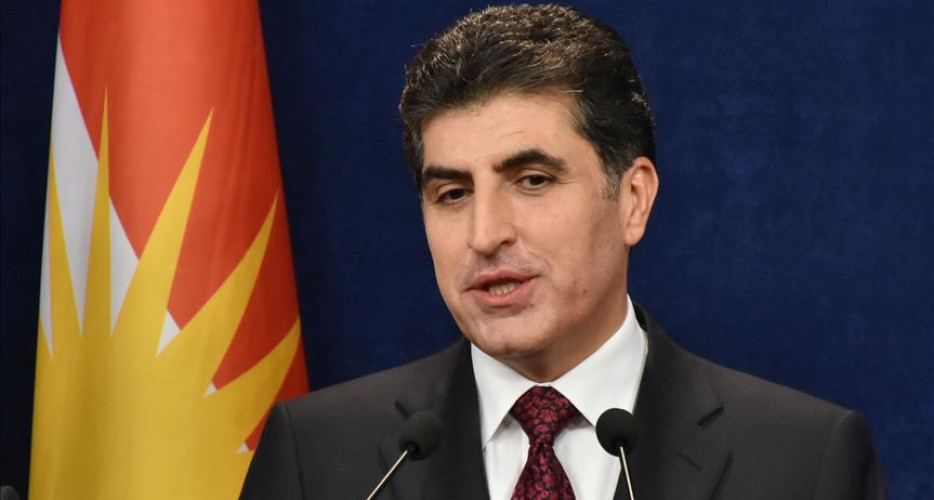
Peregraf — Nechirvan Barzani, President of the Kurdistan Region, on Wednesday, February 25, 2026, welcomed Turkey’s newly approved parliamentary report on the Kurdish issue, describing it as a constructive step toward peace. This welcome comes as sharp disagreements persist between Ankara and Kurdish actors over the framework of the ongoing peace process.
“I welcome the report by the National Unity, Brotherhood, and Democracy Committee in the Turkish Parliament. I view it as an important step and a correct direction toward peace and a resolution,” Barzani said in an official statement.
His remarks arrive at a sensitive moment. Turkish President Recep Tayyip Erdoğan has declared the beginning of a “new phase” in the state-led initiative aimed at ending the conflict with the Kurdistan Workers’ Party (PKK). However, Erdoğan continues to define the process primarily through a counterterrorism lens.
Barzani emphasized that lasting stability depends on dialogue rather than confrontation. “Advancing the language of politics and dialogue, and a commitment to peaceful solutions, are the fundamental pillars for building permanent stability that benefits the entire region,” he stated.
Support for Dialogue Amid Regional Stakes
The Kurdistan Region’s president reiterated Erbil’s consistent position in favor of peaceful resolution efforts. “As always, we in the Kurdistan Region emphasize our support and cooperation for any effort or step aimed at the peaceful resolution of issues and opening a new horizon for brotherhood and coexistence,” he added.
Barzani also expressed hope that Turkey’s parliament would take further steps to reinforce trust and move the process forward. “We hope further steps will follow in Parliament to further strengthen trust and achieve the peace that everyone is waiting for,” he said.
Parliamentary Report Draws Mixed Reactions
The report referenced by Barzani was finalized last week by a special commission in the Grand National Assembly of Turkey, following months of deliberation. Spanning more than 4,000 pages, it outlines proposals on disarmament, legal reform, and democratization.
However, the document repeatedly characterizes the PKK as a terrorist organization and frames the issue largely in security terms. This approach is endorsed by Turkish officials but strongly criticized by Kurdish political representatives.
Numan Kurtulmuş, Speaker of Parliament, described the issue as primarily one of terrorism. He clarified that the report does not include amnesty provisions, though he acknowledged that broader constitutional reform will eventually be necessary.
Kurdish Parties and Öcalan Push Back
Lawmakers from the Peoples’ Equality and Democracy Party (DEM Party) have rejected both the terminology and underlying framework of the report. They argue that it reduces a complex political issue to a security problem.
They have called for reframing the initiative as a “Peace and Democratic Society Process,” in line with proposals by Abdullah Öcalan. According to a recent account of meetings with Öcalan, he warned that a strategy focused solely on “eliminating terrorism” would lead to a deadlock rather than a durable solution.
DEM officials have also urged recognition of Kurdish identity, expanded linguistic and cultural rights, and the inclusion of Öcalan as a central interlocutor in any meaningful negotiations.
A “New Phase” with Old Fault Lines
Erdoğan’s announcement of a “new phase” has raised cautious expectations but has not resolved the core disagreements over the direction of the process. While Ankara emphasizes unity, coordination, and the elimination of armed groups, Kurdish actors continue to call for a broader political and democratic framework.
Barzani’s statement notably avoided the contentious language that has defined the debate, instead focusing on the importance of dialogue and gradual confidence-building.
Analysts say this positioning reflects the Kurdistan Region’s interest in stability across its borders, particularly given the long-running conflict between Turkey and the PKK, which has had direct security and political implications for northern Iraq.
Fragile Momentum
The convergence of Erdoğan’s “new phase,” the parliamentary report, and Barzani’s endorsement underscores a moment of potential movement—yet also highlights the fragility of the process.
Whether Turkey’s initiative can evolve beyond its current security-centered framework remains an open question. For now, Barzani’s call for dialogue adds a moderating voice to an increasingly polarized debate, as regional and domestic actors weigh the prospects for a sustainable peace.