Erdoğan Signals 'New Phase' in Peace Process as Kurds Reject 'Terrorism-Only' Approach
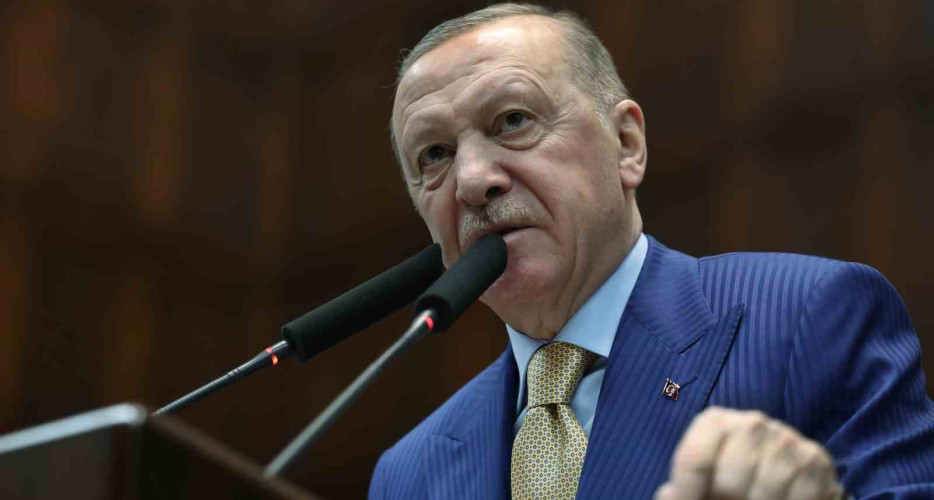
Peregraf — Recep Tayyip Erdoğan signaled the start of what he described as a “new phase” in Turkey’s state-led process addressing the conflict with the Kurdistan Workers’ Party (PKK), while maintaining his government’s long-standing position that the issue remains fundamentally one of terrorism—a stance sharply rejected by Kurdish political actors and Abdullah Öcalan.
Speaking at his party’s group meeting in the Grand National Assembly of Turkey (TBMM) on Wednesday, Erdoğan framed the coming period as a critical turning point. “We are entering a period where we must bring the solidarity, coordination, and cooperation between us to its peak,” he said. “We will manage the new phase of the process with calmness and composure.”
The remarks suggest a transition in Ankara’s approach after more than a year of what officials have called the “Terrorism-Free Turkey” initiative. Yet Erdoğan’s speech made clear that the government does not intend to abandon its security-centered framing. “We will reach our goal of a Terrorism-Free Turkey and then a Terrorism-Free region,” he said, reiterating that the elimination of the PKK remains central to the process.
A “New Phase” Without a New Language
Erdoğan described the initiative, now in its 16th month, as a state project that has already achieved “significant progress.” His emphasis on discipline and coordination in the “new phase” appeared aimed at consolidating political and institutional alignment as the process advances.
At the same time, he linked the initiative to a broader vision of national unity. “The report… is a valuable signature placed on Turkey’s common future and the further strengthening of the brotherhood of 86 million people,” he said, referring to the recently approved parliamentary commission findings.
He also stressed sensitivity toward those affected by decades of conflict. “In every step we have taken… we have acted… without hurting the relatives of our martyrs or our veterans,” Erdoğan said, signaling that public sentiment around security and sacrifice will continue to shape policy.
Despite the forward-looking tone, Erdoğan avoided adopting terminology associated with past peace efforts, instead continuing to define the process through counterterrorism objectives.
Parliament Reinforces Security Framework
The president’s remarks come in the wake of a comprehensive report issued by a special parliamentary commission tasked with addressing the Kurdish issue. The 4,199-page document—compiled after 88 hours of deliberations—lays out proposals on disarmament, legal reform, and democratization.
Numan Kurtulmuş, Speaker of Parliament, underscored the report’s core framing, describing the matter primarily as a terrorism issue and clarifying that it does not include provisions for amnesty.
While the report acknowledges the need for expanded rights and political inclusion, its repeated designation of the PKK as a terrorist organization—and its broader security-oriented language—has drawn criticism from Kurdish representatives.
Kurdish Actors Reject “Terrorism-Only” Approach
Leaders from the Peoples’ Equality and Democracy Party (DEM Party) argued that Erdoğan’s speech, despite referencing a “new phase,” does not signal a substantive shift in approach.
They criticized both the presidential rhetoric and the parliamentary report for reducing a complex political and historical issue to a matter of security. Instead, they have called for reframing the initiative as a “Peace and Democratic Society Process,” echoing proposals advanced by Öcalan.
According to a DEM delegation that recently met with the imprisoned Kurdish leader, Öcalan warned that the current framework risks failure if it remains narrowly focused on counterterrorism. “The policy of treating this issue through the logic of ‘eliminating terrorism’ represents a deadlock, not a solution,” he said.
Öcalan advocated for a broader strategy centered on democratic integration, recognition of Kurdish identity, and structural reforms to citizenship. He proposed the concept of a “free citizen,” emphasizing equal rights regardless of ethnic or religious background.
Tensions Over Terminology and Direction
At the heart of the disagreement is the language defining the process itself. Kurdish lawmakers argue that terms such as “Terrorism-Free Turkey” exclude recognition of the country’s multiethnic composition and undermine trust.
They have called for official acknowledgment of Öcalan as a central interlocutor, as well as guarantees for cultural and linguistic rights, including mother-tongue education and constitutional recognition of diversity.
For Ankara, however, maintaining the terrorism framework appears politically and strategically essential. Erdoğan’s insistence on unity, coordination, and composure suggests that the government views the next phase as one requiring careful management rather than a fundamental redefinition.
Fragile Prospects for Progress
The emergence of a “new phase” highlights both opportunity and uncertainty. While Erdoğan’s language points to a potential shift in tempo or method, the absence of a new conceptual framework underscores the persistence of long-standing divisions.
Analysts note that previous peace efforts have faltered over similar fault lines—particularly the tension between security priorities and political recognition. The latest developments suggest that those underlying disagreements remain unresolved.
Kurtulmuş acknowledged that deeper changes may ultimately be unavoidable, stating that constitutional reform, though outside the commission’s mandate, “cannot be delayed” if a lasting solution is to be achieved.
For now, Erdoğan’s message is one of controlled transition: a new phase, but not a new paradigm. Whether that approach can bridge the gap with Kurdish actors who reject a “terrorism-only” framework will likely determine the trajectory of the process in the months ahead.