Coordination Framework Avoids Naming PM Candidate as Iraq’s Political Deadlock Deepens
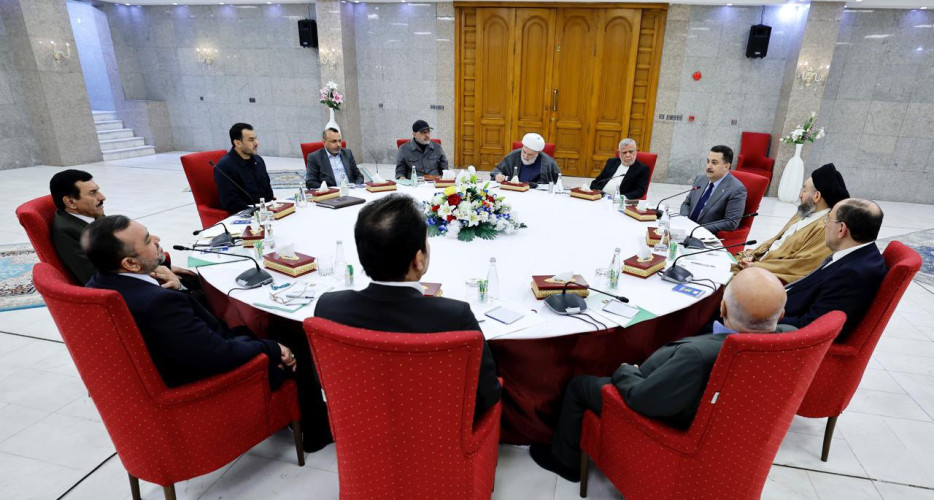
Peregraf — Iraq’s Shiite-led Coordination Framework held its regular meeting on Monday evening, issuing an official statement that notably avoided naming a candidate for prime minister—particularly Nouri al-Maliki, whose candidacy continues despite ongoing rejection from U.S. President Donald Trump—amid intensifying political divisions and growing international pressure.
No Mention of PM Candidate
Despite weeks of debate within the Coordination Framework, the statement made no mention of al-Maliki, who has openly declared his intention to remain in the race. In a recent interview, he said he has “absolutely no intention to withdraw,” insisting that no foreign power should influence Iraq’s leadership choices.
The omission is widely interpreted as a strategic move rather than a shift in position. Political observers suggest that by avoiding public endorsement, the Framework may be attempting to manage internal divisions while preserving al-Maliki as a consensus—or default—candidate.
Focus on Kurdish Presidency Dispute
Instead of addressing the premiership directly, the Framework called on Kurdish parties to resolve their dispute over the presidency, a key constitutional step required before a prime minister can be formally appointed.
Under Iraq’s political system, once a president is elected, they designate the largest parliamentary bloc’s nominee to form a government. The Framework’s emphasis on accelerating the presidential selection process may signal confidence that its preferred candidate—potentially al-Maliki—would ultimately be tasked with forming the next cabinet.
U.S. Opposition and Rising Pressure
The political maneuvering comes amid clear opposition from Washington, where President Trump has reiterated his rejection of al-Maliki’s return to power. U.S. concerns reportedly center on al-Maliki’s ties to Tehran and broader regional dynamics.
U.S. pressure has gone beyond political signaling. Iraqi officials have confirmed that recent communications from Washington included warnings of potential sanctions tied to the selection of the next prime minister, alongside conditions for continued cooperation.
These include reforms to Iraq’s financial system, restructuring of state institutions, and addressing the role of armed groups outside formal state control.
Internal Divisions Widen
Domestically, resistance to al-Maliki’s candidacy appears to be growing. Allies of current Prime Minister Mohammed Shia al-Sudani are reportedly reassessing their support, reflecting mounting political and public pressure.
Bahaa al-Araji, a key political figure aligned with al-Sudani, described earlier backing for al-Maliki as a tactical step aimed at breaking the political stalemate. However, he acknowledged that the move has encountered significant opposition from within the Coordination Framework and across Iraq’s broader political landscape.
These disagreements have exposed widening fractures within the Shiite alliance, complicating efforts to reach consensus on government formation.
Prolonged Political Crisis
Iraq remains locked in a prolonged political impasse, with no agreement on either the presidency or the premiership. The deadlock underscores the complex interplay between domestic rivalries and external influence, particularly from Washington and Tehran.
While the Coordination Framework projects unity in its official messaging, its silence on the prime ministerial candidate suggests unresolved internal disputes—and a strategy that may hinge on procedural developments rather than open political consensus.
As negotiations continue, the question of whether al-Maliki will ultimately emerge as the Framework’s candidate—or become the focal point of further division—remains central to Iraq’s uncertain political trajectory.