U.S. Perspective Central as Iraq Navigates Government Formation, Says FM Hussein in Meeting with Ambassador Thomas Barrack
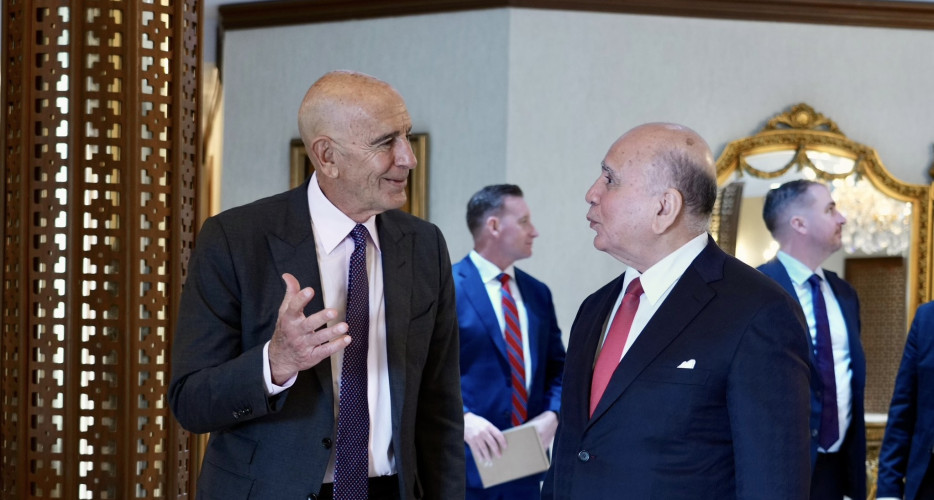
Peregraf — Iraq’s Deputy Prime Minister and Foreign Minister, Fuad Hussein, met today in Baghdad with U.S. Special Envoy and Ambassador Thomas Barrack and his delegation to discuss bilateral cooperation, regional security, and Iraq's ongoing government formation process.
The meeting underscored the importance of U.S.-Iraqi coordination across multiple fronts:
* Counterterrorism and ISIS Repatriation: Both sides reviewed efforts to strengthen Iraqi sovereignty through the repatriation of ISIS detainees to Iraqi prisons. The U.S. delegation praised Baghdad’s recent measures, including the transfer of foreign nationals, and commended Iraq’s continued coordination with other nations—notably Turkey—in managing the return of citizens linked to terrorism.
* Regional Stability: Discussions addressed the political transition in Syria, with both sides expressing support for the agreement between the Syrian Democratic Forces (SDF) and the Syrian Transitional Government. Minister Hussein also highlighted Iraq’s commitment to peaceful resolutions regarding U.S.-Iran relations, stressing the regional risks of military escalation.
* Government Formation: While reaffirming that the formation of a new government is fundamentally an internal Iraqi matter, Minister Hussein acknowledged that the perspectives of international partners—particularly the United States—are carefully considered. “This ensures that the new government can engage positively with the international community,” he stated, emphasizing the need for continued coordination until the political process concludes.
The meeting comes amid heightened U.S. interest in Iraq’s choice for prime minister. Former Prime Minister Nouri al-Maliki, a leading candidate for the premiership, announced yesterday his openness to establishing strong partnerships with the United States and Europe, signaling a willingness to align with international expectations. However, U.S. President Donald Trump has maintained his opposition to al-Maliki’s return to power—a stance he first expressed last month. This dynamic highlights the delicate balance between Iraq’s domestic politics and its diplomatic relations with Washington.
Ultimately, these discussions reflect Washington’s ongoing role as a key ally during a sensitive transitional period for Iraq, as the United States continues to closely monitor the country's political developments, counterterrorism efforts, and broader regional security challenges.