Iraqi Speaker Seeks Federal Court Interpretation Amid Presidential Election Deadlock
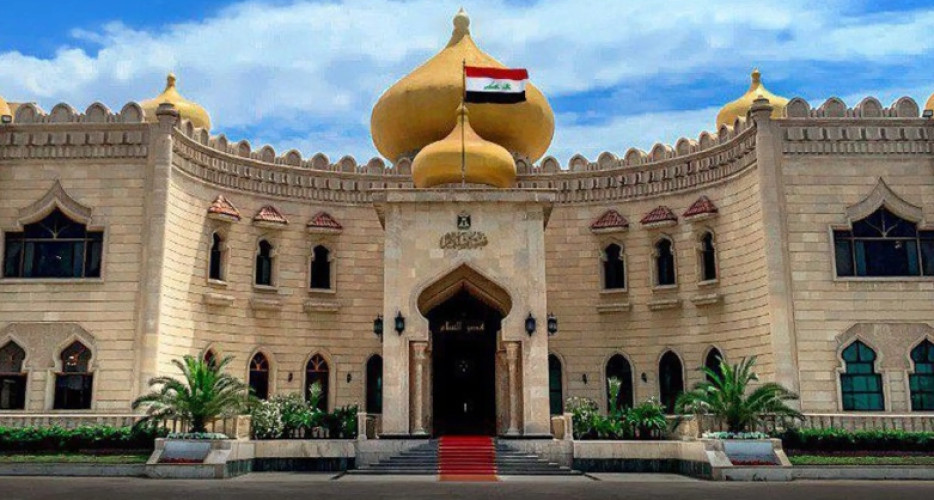
Peregraf - The Speaker of the Iraqi Council of Representatives has formally requested an interpretation of a key constitutional article from the Federal Supreme Court, as Iraq remains unable to elect a new President of the Republic due to repeated failures to secure a full parliamentary quorum.
In an official letter dated February 12, 2026, Speaker Haibat al-Halbousi asked the court to clarify Article 72 (Second/b) of the Iraqi Constitution, which regulates the continuation of presidential duties and sets a 30-day deadline for electing a new president following the first session of a newly elected parliament.
The request comes after the expiration of the final constitutional deadline for electing a president on February 1, 2026. Despite repeated attempts, parliament has been unable to complete the vote, as several sessions failed to reach the required two-thirds quorum.
According to the letter, the Council of Representatives continues to convene regular sessions based on its legislative agenda, but has refrained from including the presidential election item due to the continued absence of the constitutionally mandated quorum.
Political Deadlock
The delay reflects deeper political divisions across Iraq’s major blocs. Within the Kurdish political camp, the Kurdistan Democratic Party and the Patriotic Union of Kurdistan have failed to agree on a joint candidate for the presidency—a position traditionally allocated to the Kurds under Iraq’s post-2003 political consensus.
The presidency race has narrowed to three prominent Kurdish figures. Incumbent President Dr. Latif Rashid has declared his intention to seek a second term. The PUK has nominated Nizar Amedi, while the KDP has officially put forward Fuad Hussein. Political observers say the outcome will largely depend on shifting parliamentary alliances and last-minute negotiations among the major blocs.
Memories remain fresh of the previous presidential election, when prolonged rivalry between the KDP and PUK ultimately led to the selection of Dr. Rashid as a compromise candidate after both parties blocked each other’s nominees. Analysts are now questioning whether a similar consensus could emerge again or whether parliament will this time rally behind an officially nominated party figure.
At the same time, Shiite political forces are grappling with internal disagreements over the next prime minister. These divisions have been further complicated by U.S. President Donald Trump’s reported rejection of Nouri al-Maliki as a potential candidate for the premiership.
Shiite blocs have publicly placed responsibility for the parliamentary impasse on the Kurdish parties, warning that if either Kurdish faction boycotts a presidential election session, Shiite lawmakers will also abstain, preventing the quorum from being met.
Broader Implications
Under Iraq’s constitutional framework, the election of the President of the Republic must be immediately followed by the nomination of a prime minister tasked with forming the next government. As a result, the presidential deadlock has effectively stalled the entire political process.
The Federal Supreme Court’s forthcoming interpretation is now widely seen as critical in determining whether current arrangements can legally continue, or whether alternative constitutional mechanisms must be considered to break the impasse.