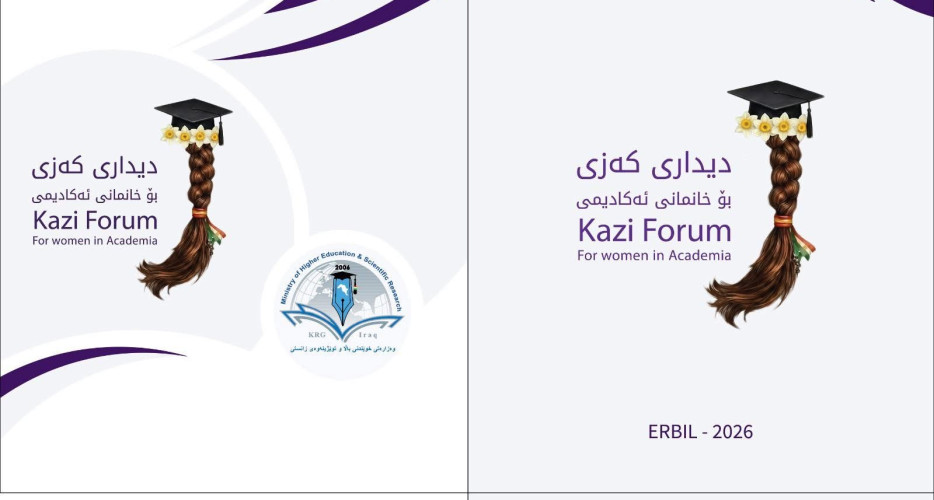
Peregraf - The Kazi (Kezî) symbol—rooted in Kurdish cultural identity and women’s dignity—has moved from the streets and social media into academic and policy discussions, as the Ministry of Higher Education and Scientific Research of the Kurdistan Region launched the “Kazi Forum for Women in Academia” across universities and scientific institutions in the Kurdistan Region.
The forum commenced today with the participation of women from academic centers within universities and higher education institutions. Discussions focus on women’s leadership roles in higher education, their contribution to skill development and innovation, and their impact on research and development.
According to the Ministry, the forum will conclude with a set of recommendations and proposals to be compiled into a draft framework. This document is expected to serve as a foundation for public policy reform aimed at strengthening the role, presence, and influence of women within universities and higher education institutions.
Officials say naming the forum after Kazi is intentional, reflecting the transformation of a cultural symbol into a broader expression of resilience, leadership, and social change led by Kurdish women.
From Cultural Symbol to Collective Movement
The renewed prominence of Kazi emerged after a widely circulated video showed a pro-Syrian government militia fighter holding what appeared to be the severed braid of a Kurdish female fighter from Rojava, believed to be a member of the Women’s Protection Units (YPJ). The footage, widely condemned, was seen as a grave insult to Kurdish women and their role in resistance and public life.
In Kurdish society, the traditional braid—known as Kezî or Kazi—symbolizes dignity, identity, and honor. In response to the incident, Kurdish women across the Kurdistan Region, Rojava, and the diaspora began braiding their hair in the traditional style. Thousands shared images online, transforming an act of humiliation into a message of defiance and unity.
The movement gained further visibility when political figures expressed solidarity, including Pervin Buldan, Deputy Speaker of the Turkish Parliament and a lawmaker from the Peoples’ Equality and Democracy Party (DEM Party), who publicly adopted the Kazi braid.
Despite later attempts by the militia fighter to deny the act, public backlash continued, reinforcing the symbolic power of Kazi. In a notable cultural shift, families in different parts of the Kurdistan Region have since begun naming their newborn daughters Kezî, turning the symbol into a lasting personal and generational legacy.