Kurdish Leaders from Iraq and Syria to Jointly Attend Munich Security Conference for First Time
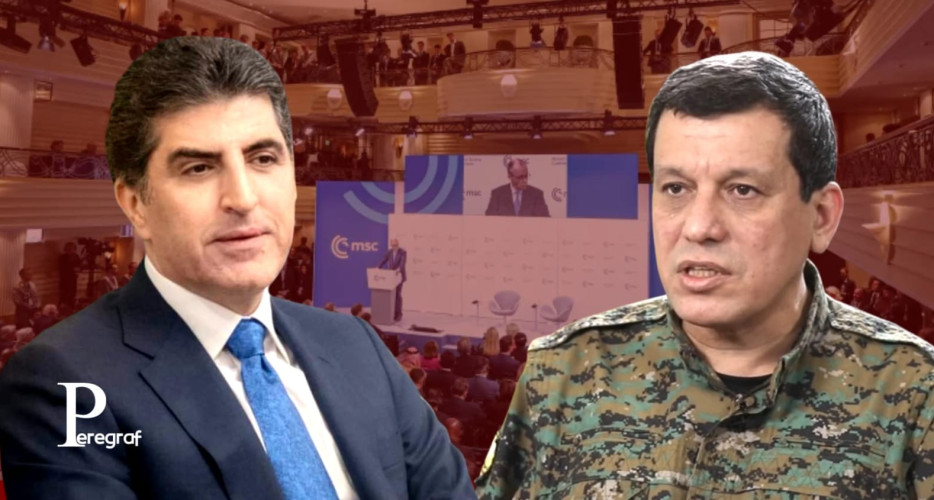
Peregraf- Kurdish political and military leaders from both the Kurdistan Region of Iraq and north-east Syria will participate for the first time in the same high-level international forum, as delegations from Erbil and Rojava attend the 62nd Munich Security Conference in Germany from February 13 to 15.
The Kurdistan Region of Iraq (KRI) delegation is headed by Nechirvan Barzani, who has been a regular participant in the annual security gathering in recent years.
In a historic first, representatives of the Democratic Autonomous Administration of North and East Syria (DAANES) have also been invited. Mazloum Abdi, Commander-in-Chief of the Syrian Democratic Forces (SDF), and Ilham Ahmed, Co-Chair of DAANES’ Foreign Relations Department, are expected to attend the conference.
According to sources familiar with the agenda, Abdi is anticipated to hold talks with Asaad Shaibani, marking the first high-level contact between the SDF leadership and Syria’s transitional government in Damascus since a political understanding reached on January 30.
The Munich Security Conference will bring together more than 1,000 participants from around 120 countries, including over 60 heads of state and government. Held under the theme “Under Destruction,” this year’s forum will address global security challenges amid ongoing conflicts and geopolitical shifts.
Among the prominent international figures expected to attend are Marco Rubio, Wang Yi, Volodymyr Zelensky, as well as senior European leaders. The regional lineup includes Hakan Fidan.
The joint participation of Kurdish leaders from Iraq and Syria is widely seen as a symbolic and political milestone. While Kurdish representatives have previously attended international forums separately, this is the first time figures from both the Kurdistan Region and DAANES have been present together at such a high-profile global event.
President Barzani and General Abdi are known to have maintained close ties, particularly following the collapse of the Assad regime in late 2024. Analysts say the inclusion of Abdi and Ahmed reflects growing international acknowledgment of their role in shaping security and political arrangements in post-Assad Syria, as well as the broader Kurdish position in regional diplomacy.