KCK’s Bayik Links Peace Process to Öcalan’s Status, Criticizes Turkish Parliamentary Commission
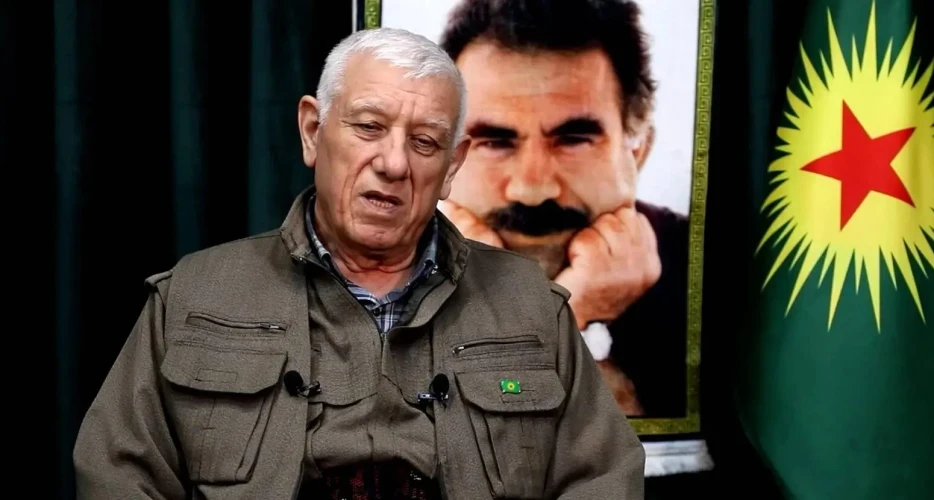
Peregraf – Cemil Bayik, co-chair of the Executive Council of the Kurdistan Communities Union (KCK), stated that progress in the "Peace and Democratic Society" process—initiated by imprisoned Kurdistan Workers’ Party (PKK) leader Abdullah Öcalan—depends on concrete steps, most notably Öcalan’s physical liberty and his ability to operate freely.
In an interview with the PKK-affiliated Firat News Agency (ANF), Bayik noted that the framework for the process was clearly defined in Öcalan’s February 27 call, stressing that any advancement must adhere to that paradigm. "Leader Apo wants the process to advance along these lines," Bayik said, adding that rhetoric alone is insufficient without action.
Bayik criticized the Turkish Parliamentary Commission tasked with addressing the peace process, arguing that it has so far failed to meet its responsibilities. "In Turkey, words are frequently spoken, but for us, practice is what matters," he said.
He added that the "Right to Hope"—a legal principle implying that prisoners, regardless of their crimes, should have a realistic prospect of release and periodic sentence review—would only be meaningful once Öcalan is granted freedom of movement and an active role in political life. "When we see the freedom of Leader Apo and the conditions for him to work freely, then we will know that the ‘Right to Hope’ has been implemented," Bayik said, warning that without such measures, the process would remain stalled.
Bayik’s remarks come amid renewed debate in Turkey following statements by Nationalist Movement Party (MHP) leader Devlet Bahçeli. During his party’s parliamentary group meeting on February 3, Bahçeli described the current situation as a "historic stage" in the Kurdish issue.
"Our decision is clear: until Anatolia finds peace, Öcalan finds hope, the ‘Ahmeds’ are restored to their posts, and Demirtaş returns to his home," Bahçeli said. He linked domestic peace to the legal status of Öcalan, the reinstatement of Ahmet Türk and Ahmet Özer—both of whom were removed from office and replaced by state-appointed trustees—and the release of former HDP co-chair Selahattin Demirtaş, who remains imprisoned despite multiple court rulings in his favor.
While Bahçeli did not outline specific legal or political steps, his comments drew attention as a rare instance in which a senior Turkish nationalist figure publicly connected Öcalan, Demirtaş, and peace within a single framework.
The debate also follows a series of symbolic developments in 2025. On July 11 of that year, 30 PKK fighters publicly burned their weapons in Jasana Cave in Iraq’s Sulaymaniyah province. Two days earlier, Öcalan appeared in a surprise video message from prison—his first public appearance in 26 years—declaring an official end to the PKK’s armed campaign and calling on the movement to pursue "democratic political methods."
Despite these gestures, Bayik reiterated that the future of the process hinges on tangible measures rather than statements, warning that meaningful progress would remain difficult without Öcalan’s physical freedom and the guarantee of an active role for him.