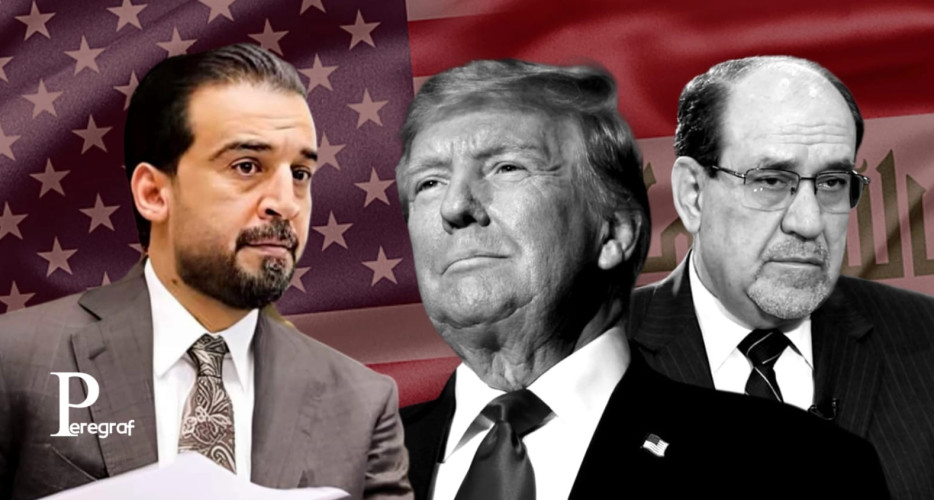
Peregraf — Mohammed al-Halbousi, leader of Iraq’s Taqadum Party, warned against supporting former Prime Minister Nouri al-Maliki in a confrontation with U.S. President Donald Trump, saying such a move would be “catastrophic” for Iraq.
Speaking to Dijlah TV, Halbousi said Iraq’s past experience with Maliki continues to cast a long shadow. “Our experience with Maliki was bitter for all Iraqis, and even after ten years, we have not escaped the problems of that era,” he said.
Halbousi stressed that Iraq needs a prime minister with strong ties to the international community and the Arab world, arguing that Maliki lacks both. “Maliki has conflicts with the world and with the Arab neighborhood,” he said.
He revealed that U.S. officials had warned Iraqi leaders ahead of President Trump’s public statements that Maliki’s nomination would be unacceptable. According to Halbousi, American officials described Maliki’s previous term as a “bad memory” and cautioned that the United States could close its embassy in Baghdad and move it to Erbil if their advice was ignored.
“Not a single Arab or Western country supports Maliki,” Halbousi said. “Iran is his only supporter.”
Emphasizing the risks of escalation with Washington, Halbousi said, “I will not stand with the Shiite [factions] against Trump. That would be catastrophic.”
Clarifying his political stance, Halbousi said his opposition targets Maliki personally, not the State of Law Coalition as a whole. He cited unresolved issues from Maliki’s tenure, including the Amnesty Law, the use of secret informants, and the unclear spending of the 2014 federal budget.
Halbousi added that U.S. officials believe Iranian interference is driving renewed efforts to promote Maliki’s candidacy and warned they would oppose such a move “by all means.”
He dismissed claims that he influenced President Trump’s position as “a fantasy,” saying he would have used such influence to return to the speakership of parliament. Halbousi also denied threatening to boycott the political process, stating instead that he would not participate in any government led by Maliki.
He concluded by expressing doubt that parliament would ever convene to formally nominate Maliki for the premiership.