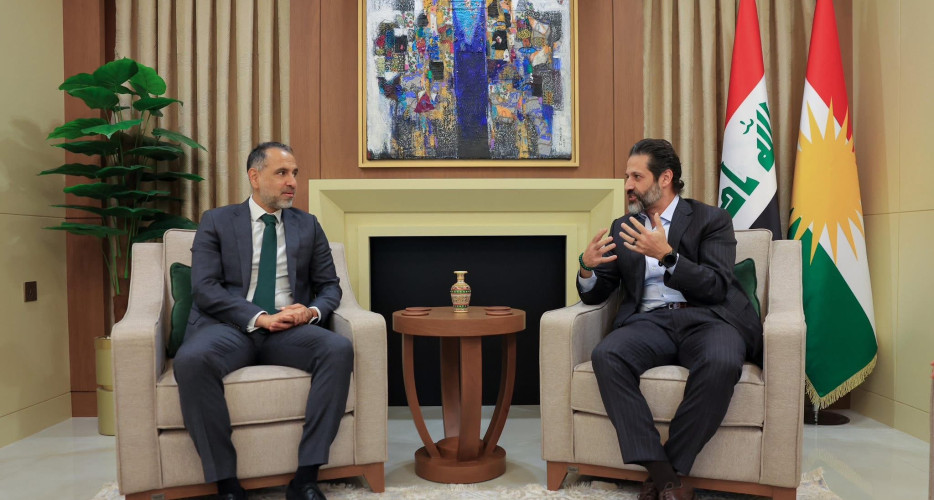
Peregraf- Qubad Talabani, Deputy Prime Minister of the Kurdistan Regional Government (KRG), said the citizens of Kurdistan need a strong and fully empowered government capable of protecting and developing the Region’s status during what he described as a “sensitive and complex phase,” while ensuring the provision of services to all regions and citizens without discrimination.
In a statement following a meeting with British Ambassador to Iraq Irfan Siddiq, Talabani said he outlined the key obstacles hindering the formation of the new KRG cabinet. He stressed that the current caretaker government lacks the authority and capacity to effectively address the Region’s pressing challenges or adequately serve citizens’ needs.
Talabani also addressed developments at the federal level, emphasizing that Iraqi political forces must take into account regional dynamics and public demands when forming the next Iraqi government. He said the future government should prioritize safeguarding Iraq’s stability while taking serious steps toward economic development and improving public services across the country.
The Kurdistan Region has been mired in political paralysis since the parliamentary elections held on October 20, 2024. Despite the passage of months, the Kurdistan Parliament remains inactive, and the formation of the new KRG cabinet has yet to be finalized. The deadlock has deepened the political and administrative vacuum in the Region, amid continued disputes between the two main ruling parties, the Patriotic Union of Kurdistan (PUK) and the Kurdistan Democratic Party (KDP), which have so far failed to reach a consensus.
This Kurdish political stalemate contrasts with developments in Baghdad, where major Shiite and Sunni blocs have largely coalesced into broader alliances to negotiate the formation of the federal government. These blocs have repeatedly urged Kurdish parties—particularly the KDP and PUK—to resolve their internal differences, especially over the post of President of the Republic, traditionally held by a Kurd, in order to advance the wider political process in Iraq.