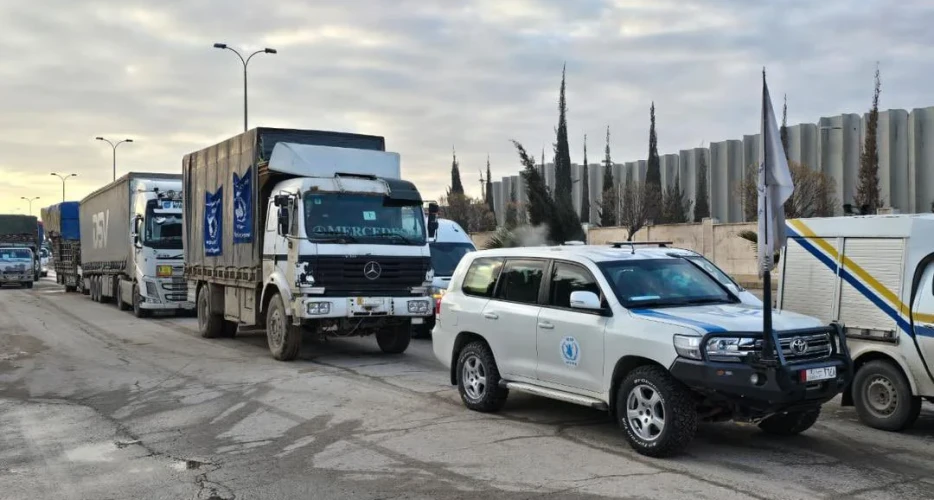
Peregraf — In coordination with relevant authorities, a United Nations–supported humanitarian convoy consisting of 24 trucks is heading to the city of Kobani today, carrying life-saving assistance including fuel, bread, and ready-to-eat food rations. The aid aims to support civilians affected by recent developments and a prolonged siege on the city.
The convoy follows an urgent appeal issued earlier by the Kurdish Red Crescent, which warned of a catastrophic humanitarian situation in Kobani amid an ongoing military campaign and blockade. In a statement, the organization called on humanitarian agencies and the United Nations—represented by UN High Commissioner for Refugees Barham Salih—to intervene immediately.
According to the Kurdish Red Crescent, Kobani and its surrounding countryside have been subjected to a suffocating blockade imposed by armed factions affiliated with the transitional government in Damascus. Despite a declared ceasefire, essential services and supplies, including water, fuel, and food, remain cut off.
The organization reported that large numbers of families have fled into the city due to the escalation, with many forced to sleep outdoors or inside their vehicles. Internet and communication services have also been severed, further isolating civilians and complicating relief efforts.
The Kurdish Red Crescent warned that the current situation evokes painful memories of the Islamic State’s siege of Kobani and urged Barham Salih to fulfill his humanitarian and moral responsibilities toward the city and its residents.
Meanwhile, the humanitarian crisis has expanded to Qamishlo, where hundreds of displaced Kurdish families are reportedly taking shelter in mosques after attacks on Kurdish areas by Damascus-affiliated militias. Local sources say the families are living in dire conditions, urgently in need of food, heating supplies, blankets, and medical assistance. Women and children reportedly make up a large proportion of those affected.
Residents noted that many of the displaced families have endured repeated displacement over the past 15 years due to ongoing instability in Rojava. In response, several humanitarian aid campaigns have been launched across the Kurdistan Region to collect relief supplies for delivery to Rojava in the coming days.
Barham Salih has faced growing criticism in Kurdish communities over the lack of immediate aid to displaced families. Commenting on the situation, Salih said, “We are monitoring the situation, and we hope it ends peacefully.”