'Kezî' Turns Into Symbol of Resistance as Newborn Girls Are Named After the Kurdish Braid
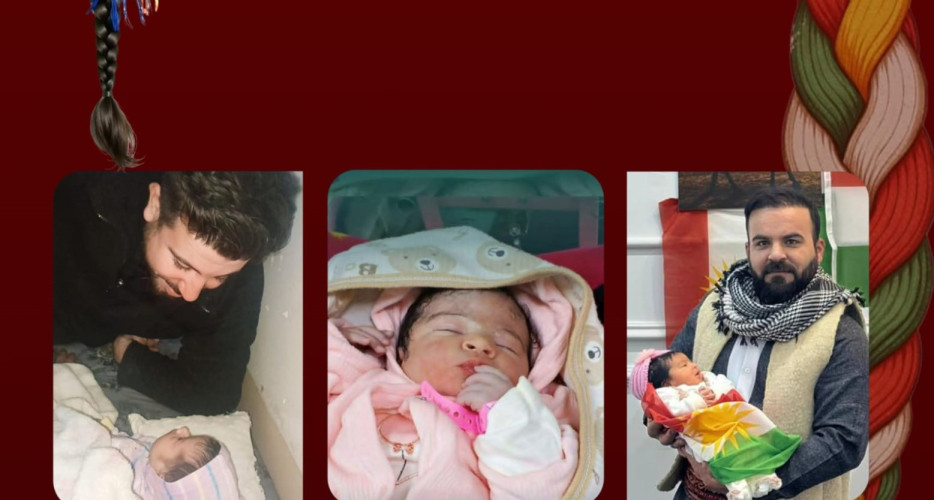
Peregraf - A powerful wave of solidarity sparked by outrage over the mistreatment of a Kurdish female fighter has now evolved into a broader social and cultural movement across Kurdistan and beyond. The traditional Kurdish braid known as Kezî has not only become a symbol of resistance but has also inspired families in the Kurdistan Region to name their newborn daughters after it.
According to local sources, several newborn girls were named Kezî today in different parts of the Kurdistan Region, reflecting the deep emotional and political impact of a movement that began as a response to a widely condemned video circulating on social media.
From Outrage to Collective Action
The Kezî braid trend emerged after a video showed a pro-Syrian government militia fighter holding what appeared to be the severed French-braided hair of a female Kurdish fighter from #Rojava, believed to be a member of the Women’s Protection Units (#YPJ). In the footage, the militant’s mocking and dehumanizing behavior triggered widespread outrage, with many Kurds and human rights advocates describing the act as reflecting an “ISIS-like mentality.”
The incident was seen not only as an attack on an individual fighter but as a grave insult to Kurdish women and their role in resistance and public life. In Kurdish society, a woman’s braid carries deep cultural meaning, symbolizing dignity, identity, and honor.
In response, Kurdish women across the Kurdistan Region, Rojava, and in several European countries began braiding their hair in the traditional Kezî (also known as Prch) style. Thousands shared photos and videos on social media, transforming an act intended to humiliate into a collective message of defiance and unity.
A Movement Spreads Beyond Borders
What began as a symbolic gesture quickly spread across Kurdistan and the diaspora. Today, women and girls from cities and towns throughout the Kurdistan Region, as well as Kurdish communities in Europe, participated in the braid-weaving action. Activists say the widespread participation reflects both anger at the original incident and pride in Kurdish women’s resistance legacy.
The movement has also drawn support from political figures. As previously reported, Pervin Buldan, Deputy Speaker of the Turkish Parliament and a lawmaker from the Peoples’ Equality and Democracy Party (DEM Party), publicly tied her hair in the Kezî style, signaling solidarity with Kurdish women fighters from Rojava.
Militant Denies Act After Backlash
Following the intense backlash, the pro-Damascus militia fighter seen in the original video appeared in a second recording attempting to deny responsibility. In the new video, he claimed that the braid he was holding was not real hair but a synthetic hairpiece. Observers widely dismissed the explanation, viewing it as an attempt to evade accountability after the incident provoked international condemnation.
Activists argue that the denial only further highlighted the impact of public pressure and the effectiveness of the solidarity campaign.
In a striking development, the Kezî movement has now entered a new phase. Families in the Kurdistan Region have begun naming newborn girls Kezî, turning the symbol of resistance into a lasting personal and cultural legacy.
Cultural observers say the naming trend underscores how deeply the issue has resonated within Kurdish society, particularly among women, and how acts of violence and humiliation can sometimes generate unexpected forms of unity and renewal.