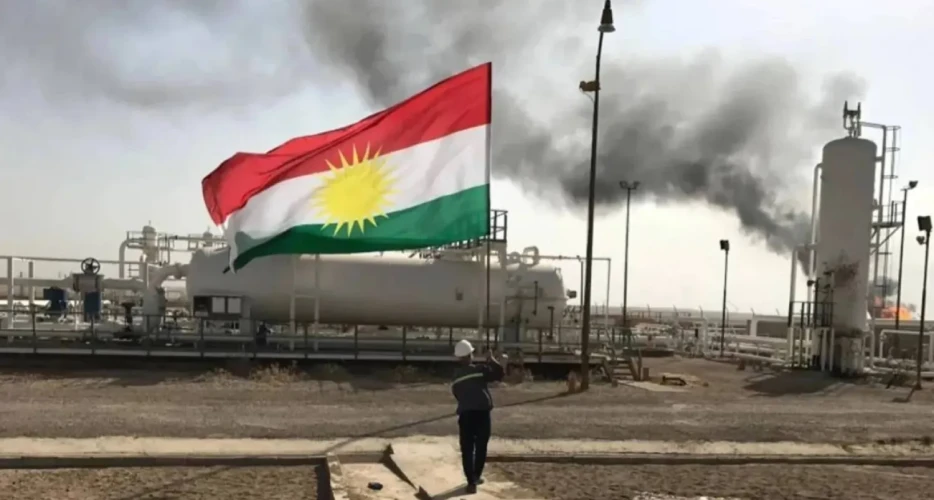
Peregraf — The Kurdistan Regional Government (KRG) says a foreign consultancy firm has begun assessing oil production and transportation costs in the Kurdistan Region, a process seen as central to stabilising relations with Baghdad and shaping Iraq’s 2026 federal budget.
KRG spokesperson Peshawa Hawramani said on Wednesday that the company assigned to the task has been working for nearly two weeks.
“This is a consultancy firm that has 90 days to submit its final findings to both the Kurdistan Regional Government and the Federal Government,” Hawramani told a press conference. “We are now waiting to see what conclusions it reaches within this period.”
Exports resume after two-year halt
Oil exports from the Kurdistan Region resumed on September 27, 2025, after being suspended for almost two years. The halt began in March 2023, following an international arbitration ruling against Ankara, which led to the closure of the Iraq–Türkiye pipeline and removed around 230,000 barrels per day from global markets.
The suspension deprived the KRG of a major source of revenue and intensified financial pressures across the region.
Despite the resumption of exports, the Kurdistan Region continues to face serious financial challenges. Baghdad has yet to transfer monthly salary allocations on time, and salaries for November and December 2025 remain unpaid, affecting more than 1.2 million public-sector employees.
Erbil–Baghdad oil agreement
The cost review is part of an agreement between #Erbil and #Baghdad that was extended by the Iraqi Council of Ministers on December 23, 2025.
Under the renewed arrangement, crude oil produced in the Kurdistan Region — excluding quantities designated for domestic consumption — is delivered to Iraq’s State Organization for Marketing of Oil (SOMO) at the Peshkhabour point. The oil is then transported via the Iraq–Türkiye pipeline to the Turkish port of Ceyhan.
Revenues from oil sales are deposited into Iraq’s federal treasury, from which the Kurdistan Region’s financial share is allocated to cover public-sector salaries and other obligations.
Cost recovery and consultancy mandate
The agreement includes a temporary cost-recovery mechanism that allocates $16 per barrel for production and transportation costs until the consultancy firm completes its assessment. Oil companies operating in the Kurdistan Region are compensated in crude oil rather than cash, while SOMO continues to pay pipeline transit fees.
The consultancy firm — approved by both the federal and regional governments — is tasked with evaluating production costs on a field-by-field basis. Once finalised, its findings will become the official benchmark for oil production costs in the Kurdistan Region.
According to amendments to the federal budget law, the consultancy must submit its estimates to Iraq’s Ministries of Oil and Finance, as well as to the KRG. These figures will be used as the legal basis for calculating compensation, with the Federal Ministry of Finance responsible for transferring the corresponding amounts to the regional government.
Risk to 2026 budget talks
Officials warn that any disagreement over the consultancy’s findings — whether from oil companies or the federal government — could undermine the current understanding between Erbil and Baghdad.
The agreement is intended to serve as a foundation for the 2026 Iraqi federal budget law, making the outcome of the cost assessment a decisive factor in future negotiations.
Meanwhile, the federal government is also in talks with Ankara to renew the Iraq–Türkiye pipeline agreement, which is due to expire in mid-2026, adding another layer of uncertainty to Iraq’s oil export framework.