U.S. Envoy Urges Immediate De-escalation as Fighting Threatens Kurdish Neighborhoods in Aleppo
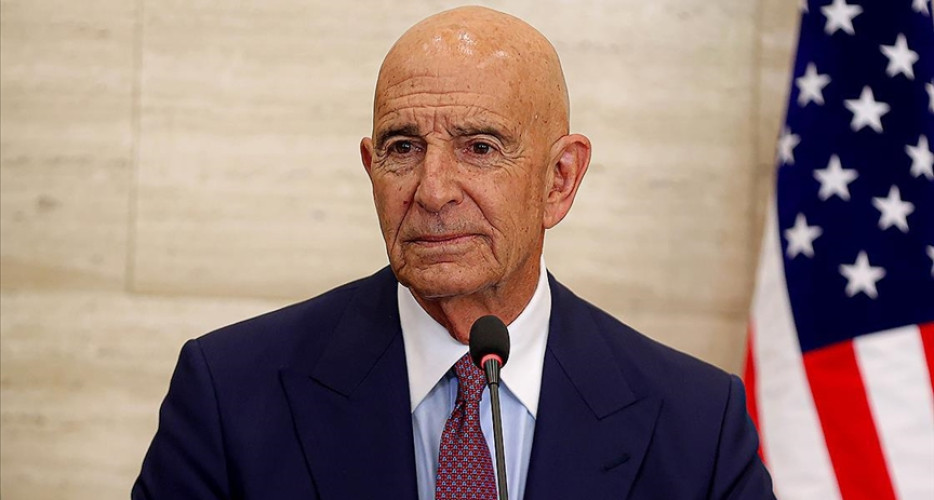
Peregraf — The United States is closely monitoring the escalating situation in the Kurdish neighborhoods of Ashrafiyeh and Sheikh Maqsoud in Aleppo, urging all parties to immediately de-escalate and prioritize the protection of civilians, according to a statement by Ambassador Tom Barrack, the U.S. Special Envoy to Syria.
In a post on X, Barrack said Washington is following developments in the two neighborhoods “with grave concern,” calling on all armed actors to exercise maximum restraint and place civilian lives and property above all other considerations. His remarks come amid reports of shelling, drone strikes, and clashes affecting densely populated residential areas in northern Aleppo.
Barrack framed the current tensions as a serious risk to what he described as significant progress made by Syria over the past thirteen months toward stability, national reconciliation, and post-war reconstruction after decades of conflict. He pointed to what he called “historic strides” and highlighted recent landmark discussions between Syrian and Israeli representatives as a pivotal step toward broader regional peace.
“These developments underscore a determination to break the cycle of violence, suffering, and atrocity that has afflicted Syria for more than half a century,” the U.S. envoy said, while cautioning that profound political and social transformations cannot be achieved overnight. He stressed that the deep scars left by prolonged war require time, patience, and tolerance to heal.
The U.S. official reiterated Washington’s support for a future Syria based on full inclusion and equal rights for all communities, including Sunnis, Kurds, Druze, Christians, Alawites, and others “without exception.” He emphasized that durable peace depends on genuine mutual understanding across all segments of Syrian society.
Barrack also revealed that, just last week, efforts were close to concluding the March 10, 2025 integration agreement between the Syrian Democratic Forces (SDF) and the Syrian government. The proposed accord, he said, would have significantly advanced security coordination, shared governance, and national unity. Despite the current escalation, he said the objective of finalizing the agreement “remains eminently achievable.”
Together with allies and regional partners, the United States stands ready to facilitate efforts aimed at reducing tensions and restoring dialogue, Barrack said. He issued an urgent appeal to the Syrian government leadership, the SDF, local authorities in Kurdish-administered areas, and all armed groups on the ground to pause hostilities and commit to immediate de-escalation.
“Let us prioritize the exchange of ideas and constructive proposals over the exchange of fire,” he said, warning that continued violence threatens the future of Aleppo and Syria as a whole.
Barrack also cautioned against what he described as “disruptive external forces and their proxies” seeking to undermine recent progress and destabilize the region. He said the goal of such actors is renewed instability, while the stated aim of the United States and its partners is lasting peace rooted in mutual respect and shared prosperity.
“Syria’s new chapter is one of cooperation, not confrontation,” Barrack concluded. “We will reach it together.”