SDF Commander Warns of War Crimes as Attacks Intensify on Kurdish Neighborhoods in Aleppo
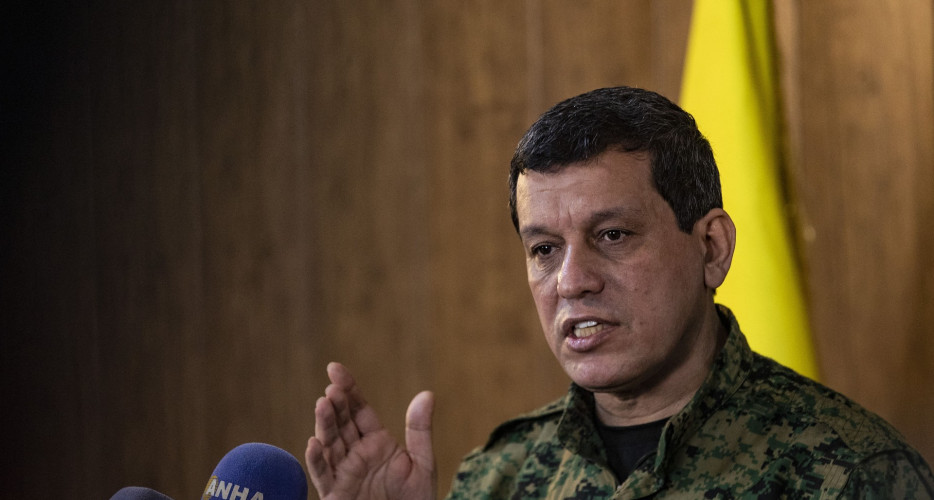
Peregraf — Mazloum Abdi, the commander-in-chief of the Kurdish-led Syrian Democratic Forces (SDF), warned on Wednesday that the continued use of military force and the “language of war” to impose unilateral solutions in Syria risks repeating past massacres and war crimes, as attacks intensify against Kurdish neighborhoods in Aleppo.
In a statement posted on X, Abdi said that persisting with combat-driven approaches is “unacceptable,” noting that similar policies in the past led to massacres amounting to war crimes along Syria’s coast and in As-Suwayda. He condemned the deployment of tanks and artillery in residential areas of Aleppo, as well as the shelling and displacement of unarmed civilians.
Abdi stressed that attempts to storm Kurdish neighborhoods during an ongoing negotiation process undermine prospects for reaching any political or security understandings. “Such actions create conditions for dangerous demographic changes and expose civilians trapped in these two neighborhoods to the risk of massacres,” he said, referring to Sheikh Maqsoud and Ashrafiyeh.
While affirming solidarity with residents of the two neighborhoods, Abdi said the SDF has been working for days with all concerned parties to halt the attacks. He also extended condolences to the families of those killed and wished a speedy recovery to the wounded.
The Kurdish-majority neighborhoods of Sheikh Maqsoud and Ashrafiyeh in northern Aleppo have come under intensified attacks in recent days, including shelling with tanks, Grad missiles, and drone strikes. Local Internal Security Forces (Asayish) have accused armed groups affiliated with Damascus, as well as Turkish-backed factions, of targeting residential areas and civilians.
According to local authorities, the attacks have resulted in civilian casualties, extensive material damage, and severe disruptions to humanitarian and medical services. Continuous shelling has at times prevented rescue teams from reaching the wounded, raising fears of a worsening humanitarian situation inside the besieged neighborhoods.
A report released on January 7, 2026, by the Department of Foreign Relations of the Autonomous Administration of North and East Syria (AANES) warned that the violence against Sheikh Maqsoud and Ashrafiyeh is systematic and deliberate, despite the absence of heavy military forces in the areas. The two neighborhoods are home to more than 500,000 residents, including tens of thousands of Kurdish families and people displaced from Afrin, fueling concerns that continued attacks could lead to mass displacement and long-term demographic change.