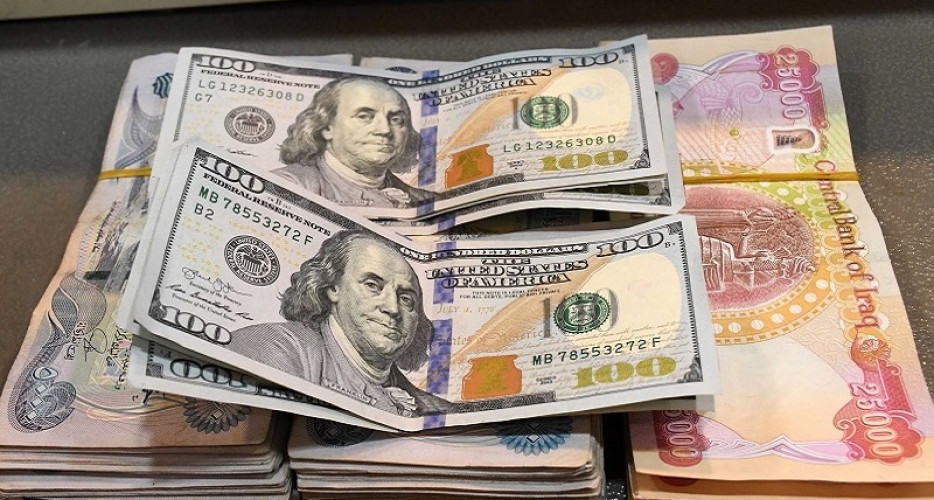
Peregraf — In recent days, the parallel exchange market in Iraq has witnessed a noticeable rise in the U.S. dollar against the Iraqi dinar. On January 5, exchange rates approached 149,000 dinars per $100, before easing to around 146,000 dinars per $100 today. The fluctuations have slightly affected the prices of several goods and commodities in local markets, raising public concern.
However, economic specialists have ruled out the possibility that these developments signal a monetary crisis. According to a report by Al-Sabah newspaper, experts stressed that the fluctuations are temporary and do not threaten overall economic stability, particularly in light of measures taken by the Central Bank of Iraq (CBI) to contain volatility.
The Iraqi Prime Minister’s Financial Advisor, Mudher Mohammad Saleh, said the recent exchange rate movements are temporary and do not reflect a structural imbalance in the Iraqi economy. He noted that the exchange rate has largely decoupled from income and consumption levels, limiting the risk of wider economic repercussions.
Economic expert Nabil Al-Abadi attributed the rise in the parallel market to a combination of internal and external structural and situational factors. He explained that Iraq’s heavy reliance on oil revenues makes the economy vulnerable to global oil price fluctuations, which directly affect the balance of payments and exchange rates.
Al-Abadi added that monetary policies aimed at reducing “dollarization,” along with tighter oversight of official dollar sales, have narrowed supply through formal channels. This has pushed part of the demand toward the parallel market, a trend exacerbated by the weakness of the local productive sector, which limits alternative sources of foreign currency.
He also pointed to the new customs system and the requirement for prior documentation under the ASYCUDA (Automated System for Customs Data) system to access dollars at the official rate. These procedures, he said, have disrupted some commercial operations and prompted a number of traders to turn to the parallel market to meet urgent needs.
According to Al-Abadi, speculation and rumors have further amplified short-term fluctuations. He noted that regional and international geopolitical tensions increase demand for hard currencies as a safe haven, disproportionately affecting markets in countries with fragile economies.
Meanwhile, Iraqi Central Bank media official Aisar Jabbar confirmed that the official exchange rate remains fixed at 1,320 dinars per dollar. He clarified that the recent rise is confined to the informal market, outside the authorized banking system for foreign transfers.
Jabbar attributed the increase to the desire of some dealers to obtain dollars outside official channels, as well as pressure linked to the implementation of pre-paid customs duties. He emphasized that the Central Bank continues to regulate transfer operations, finance trade, and maintain market stability.
Economic specialists concluded that addressing such fluctuations in the long term requires comprehensive structural reforms, including diversifying income sources, strengthening the productive private sector, and regulating foreign trade to enhance exchange rate stability and reduce the likelihood of recurring volatility.