Dr. Latif Rashid, KDP, and PUK Announce Presidential Candidates as Iraq’s Nomination Deadline Arrives
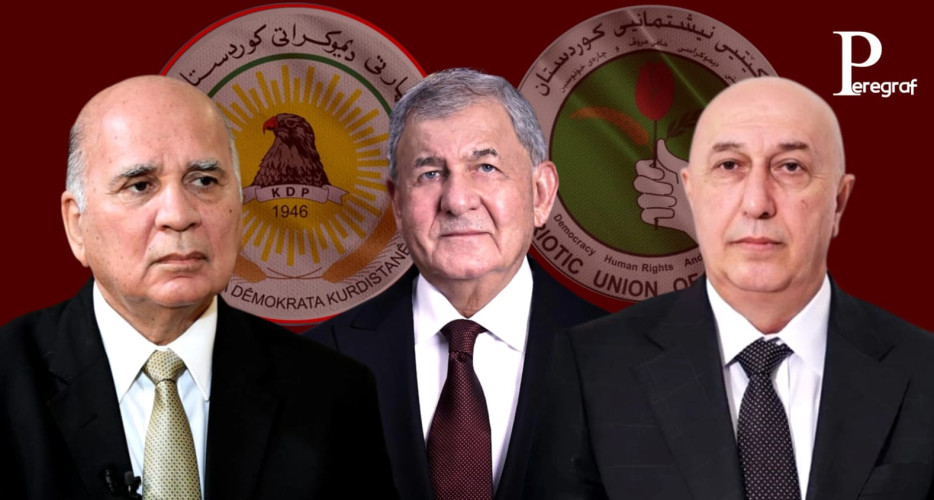
Peregraf — The race for Iraq’s presidency reaches a critical moment today, with the nomination deadline expiring at the end of official working hours. The current president, Dr. Latif Rashid, has officially nominated himself to run for a second term. In addition, the Patriotic Union of Kurdistan (PUK) has named Nizar Amedi, and the Kurdistan Democratic Party (KDP) has announced Fuad Hussein as their official candidates. These three figures are now considered the most prominent Kurdish contenders, and it is highly likely that one of them will secure the presidency.
Karwan Gazneyi, the PUK spokesperson, confirmed that Nizar Amedi is the party’s sole official nominee. Amedi, a former Iraqi Minister of Environment, is a close associate of the late Jalal Talabani (Mam Jalal), the former President of Iraq. Since 2003, he has been based in Baghdad and remains a trusted confidant of Talabani’s family.
The presidential position in Iraq is traditionally allocated to the Kurds under the post-2003 power-sharing arrangement. Within Kurdish politics, it is generally regarded as the PUK’s share. However, historical disputes between the Kurdish parties continue to influence the race.
In the previous term, Dr. Latif Rashid ran as an independent while Barham Salih was the PUK nominee. The KDP opposed Salih, and Dr. Latif ultimately became president as a compromise candidate. Analysts now question whether the same scenario could repeat itself this time: will Dr. Latif secure another term to resolve intra-Kurdish disputes, or will one of the official party nominees win the post?
More than 40 candidates, including Arabs and independents, have submitted their applications. Despite this large pool, their chances remain limited due to the Kurdish claim to the position.
The renewed contest follows tensions over another senior federal post—the Second Deputy Speaker of the Iraqi Parliament—which also falls under the Kurdish share. That contest extended to three rounds of voting. In the first two rounds, the PUK withheld support from the KDP’s candidate, allowing a rival to take the lead. In the third round, after the KDP replaced its nominee, the PUK shifted support to the new candidate, who ultimately won.
Under Iraqi law, presidential candidates must meet constitutional and legal criteria: they must be born in Iraq to Iraqi parents, enjoy full legal capacity, be at least 40 years old, have a good reputation, demonstrate integrity and loyalty to the country, hold at least a bachelor’s degree from a recognized university, have no convictions for crimes of moral turpitude, and not be subject to the Accountability and Justice Law.
Following the first session of the new Iraqi Parliament and the election of its leadership—completed recently—the constitution requires that the President of the Republic be elected within 30 days. Once elected, the president has 15 days to designate a prime ministerial candidate, typically from the largest parliamentary bloc, to form a government. The prime minister then has 30 days to present a cabinet lineup and program to parliament and seek a vote of confidence.
As the nomination deadline ends today, all eyes are on Baghdad and Erbil to see whether Dr. Latif Rashid will win a second term as a compromise candidate or whether the Kurdish parties will settle on one of their official nominees, shaping Iraq’s federal leadership for the coming term.