Peregraf — Sunni political forces in Iraq remain divided over the nomination for the post of Speaker of Parliament, just one day ahead of the first session of the newly elected Council of Representatives.
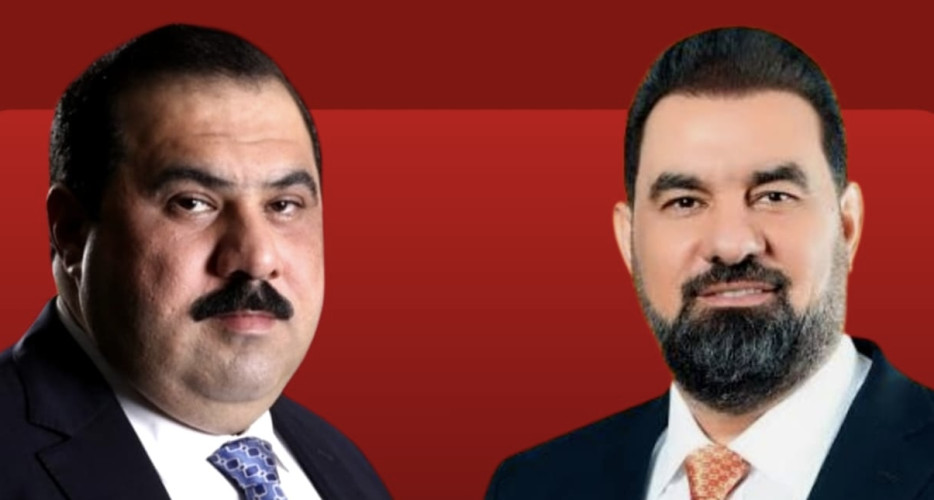
The National Sunni Political Council announced the nomination of Haibat al-Halbousi for the speakership, presenting him as the consensus candidate of the majority of Sunni parties. However, the Azm Alliance, despite being a member of the council, rejected the move and reiterated that Muthanna al-Samarrai remains its sole nominee for the position.
Khamis al-Khanjar stated that most Sunni political blocs have agreed on Haibat al-Halbousi, stressing that his nomination reflects a collective Sunni position. Four major political forces—Taqaddum, Siyada, the Al-Jamahir Alliance, and the National Hasm—have publicly backed al-Halbousi.
The dispute comes as the Iraqi parliament prepares to hold its first session on December 29, 2025, during which the Speaker of Parliament and two deputies are to be elected. The speakership is traditionally allocated to the Sunni component, and Sunni parties have been engaged in intensive consultations to reach a unified stance ahead of the vote.
President Abdul Latif Rashid issued a presidential decree on December 16 calling lawmakers to convene, following the Federal Supreme Court’s ratification of the final election results on December 14, which officially triggered the constitutional timelines for government formation.
According to constitutional provisions cited by the Supreme Judicial Council, parliament must elect the Speaker and two deputies within 15 days of ratification, by an absolute majority, during the first session chaired by the oldest member. Lawmakers are also required to take the constitutional oath during the session.
Within 30 days of electing the Speaker, parliament must choose the President of the Republic by a two-thirds majority (220 votes). The elected president then has 15 days to task a prime ministerial nominee, who is granted up to 90 days to form a cabinet and seek parliamentary confidence.
Final results show the Construction and Development Coalition, led by Prime Minister Mohammed Shia al-Sudani, emerged as the largest bloc with 46 seats, followed by the State of Law Coalition with 29 seats. Taqaddum and the Kurdistan Democratic Party (KDP) each secured 27 seats, while the Patriotic Union of Kurdistan (PUK) won 18 seats. Nationwide voter turnout reached 56.11 percent.
Meanwhile, the Shiite Coordination Framework has announced it formed the largest parliamentary bloc and reaffirmed its intention to nominate the next prime minister, emphasizing adherence to constitutional deadlines.
On the Kurdish front, the KDP and PUK have yet to reach a unified position in Baghdad, particularly regarding the post of President of the Republic, traditionally held by a Kurd. Iraqi political forces have repeatedly urged the two parties to reach an internal agreement, warning that continued division could complicate the next phase of government formation.