PM Sudani Says Prime Minister Talks at Deadlock, Confirms Base Handovers and Push for Iran–US Talks
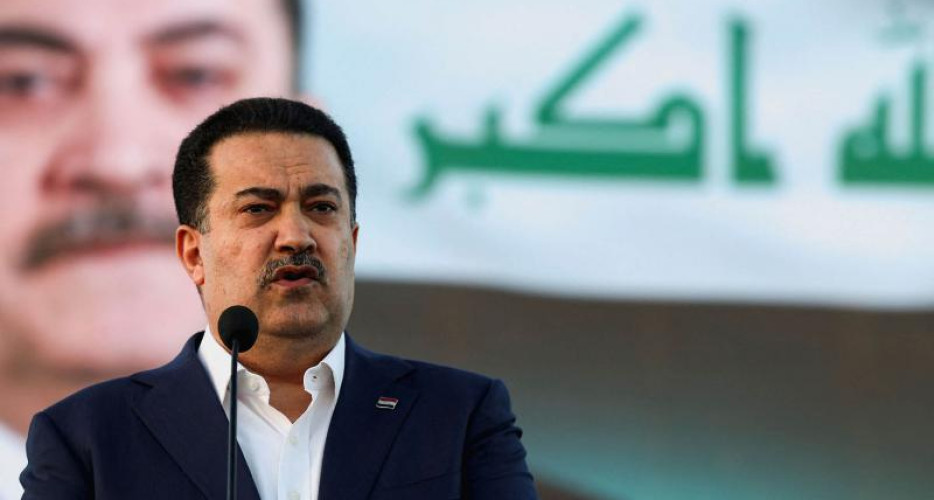
Peregraf — Iraqi Prime Minister Mohammed Shia al-Sudani has announced that political negotiations to select a new prime minister have reached a deadlock, more than 40 days after the announcement of election results, underscoring the depth of divisions within the Coordination Framework, the Shiite political bloc that dominates Iraq’s governing landscape.
In an interview with Al-Mayadeen, Sudani said discussions have stalled despite weeks of meetings and consultations, describing the current phase as one of political paralysis.
“More than 40 days after the announcement of the election results, the Coordination Framework’s discussions on the issue of selecting a Prime Minister remain stationary. I believe we have reached a stage of deadlock,” Sudani said.
Stalled Negotiations
Sudani confirmed that he and former Prime Minister Nouri al-Maliki remain candidates for the premiership, while noting that the name of Haider al-Abadi was also proposed during meetings, alongside other figures suggested by Iraqi political actors.
The remarks come amid growing concern that prolonged negotiations could delay the formation of a new government, at a time when Iraq is facing regional tensions, economic pressures, and unresolved security challenges.
Baghdad as a Diplomatic Bridge
On foreign policy, Sudani revealed that Iraq is attempting to play a mediating role between Iran and the United States, with efforts underway to organize a meeting between officials from both countries in Baghdad.
He said the issue was discussed during a recent visit by Tom Barrack, adding that Iraq’s relationship with Tehran could be leveraged to help revive dialogue between Washington and Tehran.
“We are attempting to arrange a meeting between Iranian and American officials in Baghdad. I suggested that they benefit from our relations with Iran to resume negotiations,” Sudani said.
Iraq has repeatedly sought to position itself as a regional mediator, hosting talks between rival powers in recent years in an effort to reduce tensions that often spill over onto Iraqi soil.
Warnings Over Regional Threats
Sudani also addressed what he described as ongoing threats from Israel against Iraq, saying such warnings are sometimes conveyed indirectly and at other times issued publicly.
“These threats are part of the occupying entity’s aggressive policy to expand the arenas of war and conflict,” he said, linking them to broader regional escalation.
Armed Groups and State Authority
On internal security, Sudani stressed that the issue of disarming armed groups is a sovereign Iraqi decision and a central pillar of the government’s program, rejecting claims that it is driven by U.S. demands.
“Disarmament is not an American demand; it is an Iraqi demand and decision,” he said.
He added that armed groups face two clear options: integration into official security institutions or participation in the political process. Sudani emphasized that he would not accept leading a government that remains passive in the face of attacks on embassies or military installations.
“I would not accept being a Prime Minister who remains a mere spectator to the bombing of embassies and military bases,” he said.
Withdrawal of Foreign Forces
Sudani confirmed that the process of withdrawing foreign forces and handing over military bases to Iraqi control is moving forward according to the announced timetable.
He said the Ain al-Asad Airbase in Anbar province will be fully handed over to the Joint Operations Command within days. The next phase, he added, will involve the Harir Airbase in Erbil, in the Kurdistan Region.
“The agreement for the withdrawal of foreign forces is progressing exactly as planned and announced,” Sudani said.
The base handovers are part of broader negotiations between Baghdad and Washington over the future presence of the U.S.-led coalition in Iraq.
Regional Meetings and Controversy
Sudani also addressed his meeting with Ahmed al-Sharaa, also known as Abu Mohammad al-Golani, saying it took place at the request of the State of Qatar.
“We responded to that request because we felt it was necessary to establish this framework and exchange perspectives,” he said, without providing further details.
Defending the Government’s Record
Comparing his government’s performance to previous administrations, Sudani said that while former Prime Minister Abadi entered elections after the military victory over ISIS, his own government approached the polls with achievements in security, stability, reconstruction, development, and public services.