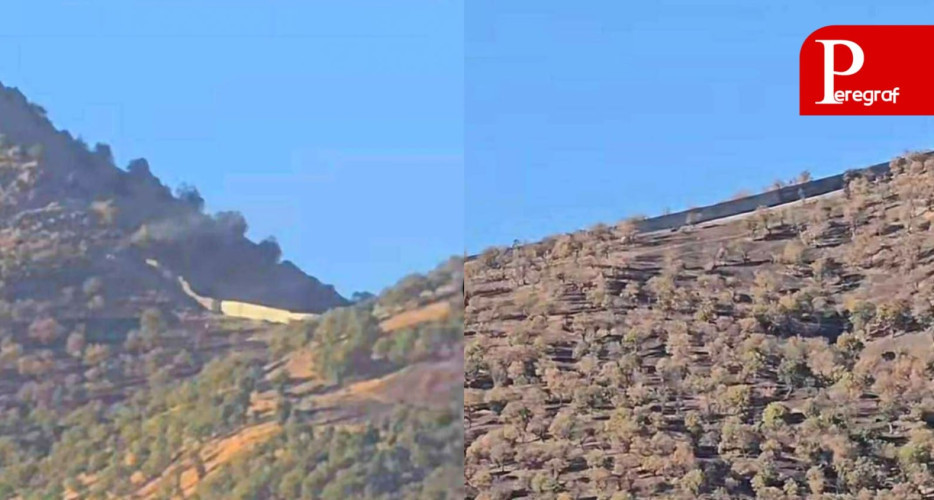
Peregraf — The American organization Community Peacemaker Teams (CPT) has revealed that Iran’s Islamic Revolutionary Guard Corps (IRGC) is constructing what it describes as a “sensitive security wall” extending 600 kilometers in length and reaching up to two kilometers deep "inside the territory of the Kurdistan Region of Iraq".
According to CPT, the project began after June 24, 2025, following the end of the 12-day conflict between Israel and Iran. Kamaran Osman, a member of CPT’s Iraqi Kurdistan team, said the wall stands three meters high and is fitted along its entire length with advanced security and alert systems.
Osman stated that the wall is being built "inside the Kurdistan Region", stretching from Mount Kelashin in the Sidakan district to the village of Cham Chaqal in the Garmian region. He added that some construction materials are being sourced locally through the excavation of Kurdistan’s mountains.
CPT detailed the current status of the project, noting that several sections have already been completed along the Sayran Ban border, behind the villages of Bahe and Shiwagozan, extending to Maran village on the Penjwin–Eastern Kurdistan (Rojhelat) border. Work in the Pshdar district has also been completed, while construction continues daily in other areas.
The organization warned that the wall, combined with Iran’s alleged presence of 151 military bases inside the Kurdistan Region, represents a serious threat to villagers, farmers, and civilians living along the border areas.
CPT also highlighted broader humanitarian and political consequences of the project, including what it described as a de facto annexation of mountains and plains behind the wall, placing them under effective Iranian control. The organization cautioned that the construction could trigger a new wave of displacement from rural border villages toward cities and further sever social and family ties between Kurds in Eastern Kurdistan (Iran) and Southern Kurdistan (Iraq).
The Kurdistan Regional Government and Iraqi federal authorities have not yet issued an official response to the report.