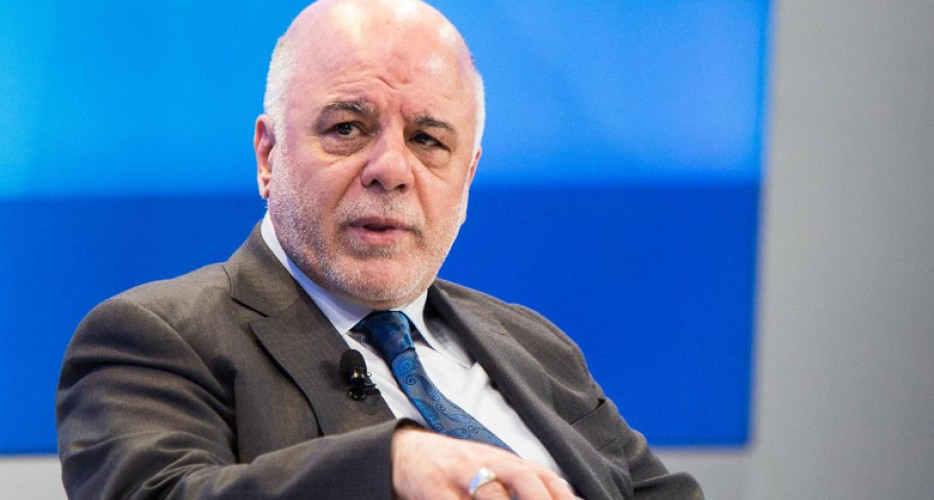
Peregraf - Former Iraqi Prime Minister Haider al-Abadi, leader of the Victory (Nasr) Alliance, has officially entered the race for the post of Iraqi prime minister, adding further complexity to ongoing efforts by Shiite parties to agree on a single candidate.
“I am one of the candidates for the position of prime minister, but it is not yet clear who the main nominee will be,” al-Abadi said after meeting with a delegation from the Kurdistan Democratic Party (KDP). He stressed that he is “psychologically and realistically prepared” to assume the post, adding, “If we are supported, we can achieve something.”
Al-Abadi pointed to his previous tenure as prime minister, noting that his government faced severe challenges, including the war against ISIS and low global oil prices. “Despite those circumstances, we were successful,” he said.
Al-Abadi also acknowledged ongoing disagreements among Shiite parties within the Coordination Framework over the choice of a prime ministerial candidate, describing such divisions as “normal.” The Shiite Coordination Framework, which brings together Iraq’s main Shiite political forces, has announced the formation of the largest parliamentary bloc and is constitutionally entitled to nominate the next Iraqi prime minister. However, internal rivalries have so far prevented consensus, leaving several meetings without a final decision.
At the same time, current Iraqi Prime Minister Mohammed Shia’ al-Sudani is seeking a second term after his Construction and Development Coalition emerged as the largest bloc in the recent elections, securing 46 seats nationwide.
Divisions Persist Among Sunnis and Kurds
Political deadlock is not limited to Shiite forces. Sunni parties have yet to agree on a single candidate for the post of Speaker of Parliament, as the first parliamentary session approaches. The inaugural session of the new Council of Representatives is scheduled to take place in five days, during which the Speaker and two deputies are to be elected.
Similarly, Kurdish parties remain divided over the post of President of the Iraqi Republic. Despite the presidency being traditionally allocated to the Kurds, the Kurdistan Democratic Party (KDP) and the Patriotic Union of Kurdistan (PUK) have so far failed to reach a unified position and continue to negotiate separately with other Iraqi political forces in Baghdad.
Iraqi President Abdul Latif Rashid issued a decree on December 16 calling on members of the newly elected parliament to convene their first session on December 29, 2025. The move followed the Federal Supreme Court’s ratification of the final election results on December 14, officially triggering constitutional timelines.
According to constitutional provisions clarified by the Supreme Judicial Council, parliament must elect the Speaker and two deputies within 15 days of ratification, by an absolute majority, during a session chaired by the oldest member of parliament and following the administration of the constitutional oath. Within 30 days of that step, parliament is required to elect the President of the Republic by a two-thirds majority—220 votes in the 329-seat legislature. The elected president then has 15 days to designate a prime ministerial nominee, who is granted up to 90 days to form a cabinet and present it to parliament for a vote of confidence.
Final election results show that the State of Law Coalition, led by former Prime Minister Nouri al-Maliki, secured 29 seats, while Taqaddum and the KDP each won 27 seats. The PUK obtained 18 seats, and nationwide voter turnout reached 56.11 percent.
Ahead of the court’s ratification, the Shiite Coordination Framework reiterated that it had formed the largest parliamentary bloc and emphasized its commitment to national cooperation and adherence to constitutional deadlines to ensure a smooth transfer of power.
Meanwhile, Iraqi political forces continue to urge Kurdish parties—particularly the KDP and PUK—to reach an internal agreement, especially on the presidency, warning that prolonged divisions could further delay government formation at a critical political juncture.