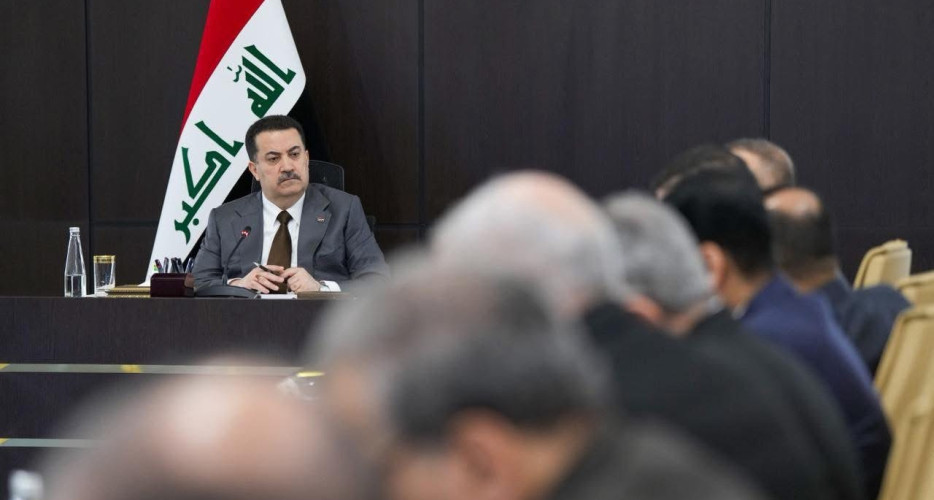
Peregraf - Iraqi Prime Minister Mohammed Shia Al-Sudani chaired an extraordinary meeting of the Ministerial Council for the Economy on Monday, issuing a package of decisions aimed at reducing government expenditure and maximizing state revenues.
According to a statement from the Prime Minister’s Media Office, the meeting focused on urgent financial reforms amid growing pressure on public finances.
As part of revenue-maximization measures, Prime Minister Al-Sudani directed the ministerial committee formed under Council of Ministers Decision No. 550 to review the mechanism for calculating non-oil revenues in the Kurdistan Region of Iraq.
Currently, these revenues are transferred to the Ministry of Finance as a fixed amount. The review will be conducted in coordination with the Kurdistan Regional Government (KRG), signaling a possible shift toward a more accurate and transparent calculation method.
Spending Reduction Measures
The Council reviewed salaries and allowances of the three presidencies. Al-Sudani ordered:
• An urgent review of salaries and allowances,
• Equalization of salaries for staff of the Presidency of the Republic and the Presidency of the Council of Representatives with those of the Prime Minister’s Office,
• An update of the unified public-sector salary scale, led by the Ministry of Planning, incorporating previous recommendations.
The Council also decided to:
• Cut official travel allocations by 90%, limiting travel to necessary cases with ministerial approval,
• Reduce supervision and oversight percentages for new projects,
• Develop and activate a national import program restricted to essential goods only.
Agriculture and Social Support
The meeting approved submitting a recommendation to the Council of Ministers to review government support for the wheat crop, ensuring it equals 170% of global market prices.
It also tasked the Minister of Trade with reforming the public food ration system, redirecting it toward citizens who are genuinely entitled, particularly vulnerable groups.
Customs, Electricity, and Automation
To further enhance revenues, the Council emphasized:
• Strengthening the advance declaration system at the General Customs Authority in coordination with the Central Bank of Iraq,
• Improving electricity bill collection, reviewing tariffs,
• Expanding automation and e-payment systems across government institutions, with electronic payment to be applied exclusively to electricity services and to collections by the Baghdad Mayoralty and municipal authorities nationwide.
The decisions reflect the government’s push for fiscal discipline, revenue transparency, and structural reform as Iraq faces mounting economic challenges.