One Year On; Kurdistan Parliament Still Paralyzed, First Session Remains Open, No Government Formed
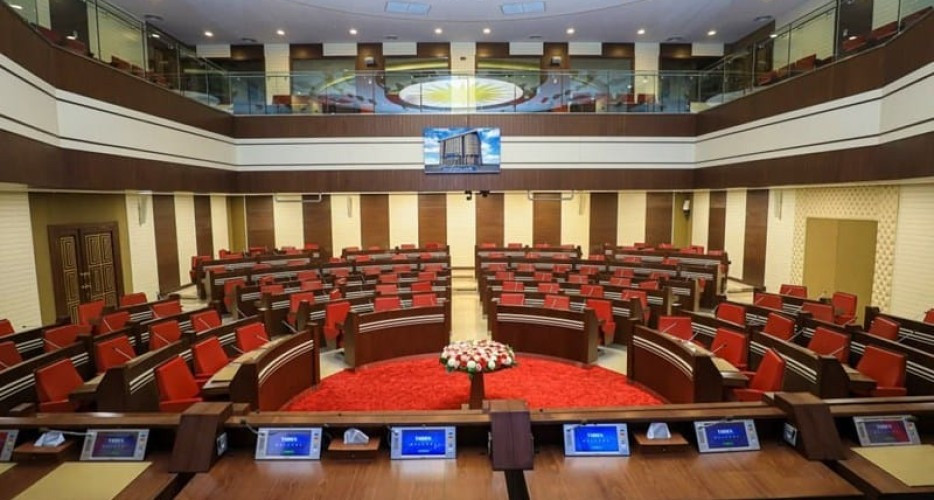
Peregraf - A full year has now passed since the first session of the Kurdistan Parliament’s sixth term was convened, yet the session remains open and incomplete. The government has not been formed, and the two major parties—the Kurdistan Democratic Party (KDP) and the Patriotic Union of Kurdistan (PUK)—have failed to reach a political agreement.
The parliamentary election for the sixth term took place one year, one month, and 12 days ago, on 20 October 2024. After the results were ratified, the President of the Kurdistan Region scheduled 2 December 2024 for the first parliamentary session. Although the session began on time, it has remained suspended and unfinished ever since.
So far, the only accomplishment of the Kurdistan Parliament has been the swearing-in of its members. Despite performing no legislative or oversight duties, MPs continue to receive high salaries—sparking widespread public criticism.
Over the past year, the parliament has failed to carry out its most basic responsibilities: electing its Presidency Board, approving the new cabinet, and passing the regional budget.
According to a detailed assessment by the Pay Institute for Education and Development, the parliament should have—under normal circumstances—already formed all its committees, held 450 committee meetings, convened nearly 100 legislative sessions, and conducted 50 oversight sessions to monitor government performance.
Because the parliament has remained inactive, the terms of four independent commissions have expired without renewal, leaving their legal and administrative status in limbo. These include:
• The Integrity Commission
• The Board of Supreme Audit
• The Human Rights Commission
• The Independent High Electoral Commission
Why Is Parliament Stalled?
Following the ratification of the election results, negotiations to form the new cabinet began. As the election’s first-place winner, the KDP called for a broad-based government and initiated talks with various parties. However, most parties opted to form the opposition, leaving only the KDP and PUK to negotiate the power-sharing arrangement.
The two parties held their first official meeting on 30 November 2024 in Sulaimaniyah. Their negotiations centered on two main issues:
1. A shared vision for governance
2. Distribution of posts
Both sides say they reached an understanding on the first issue within the first six months. But discussions on the distribution of posts quickly hit a deadlock—bringing the entire process to a halt.
At the core of the dispute is the Ministry of Interior, the most influential security post in the region.
• The KDP, as the election victor, insists the ministry is its rightful entitlement.
• The PUK argues it should receive the post in the interest of “true partnership” in governance.
The KDP has expressed frustration over what it sees as PUK attempts to delay government formation until after the Iraqi parliamentary election. After the Iraqi results were announced, KDP President Masoud Barzani declared that “pre-election conditions are over” and that negotiations must now reflect the new political landscape.
In the Iraqi election, the KDP won the second-highest number of votes nationally but saw its seat count drop from 31 to 27. However, all five minority quota seats were won by candidates backed by the KDP. The PUK, despite receiving roughly half the votes of the KDP, managed to retain its previous tally of 18 seats—narrowing the numerical gap in parliamentary power.