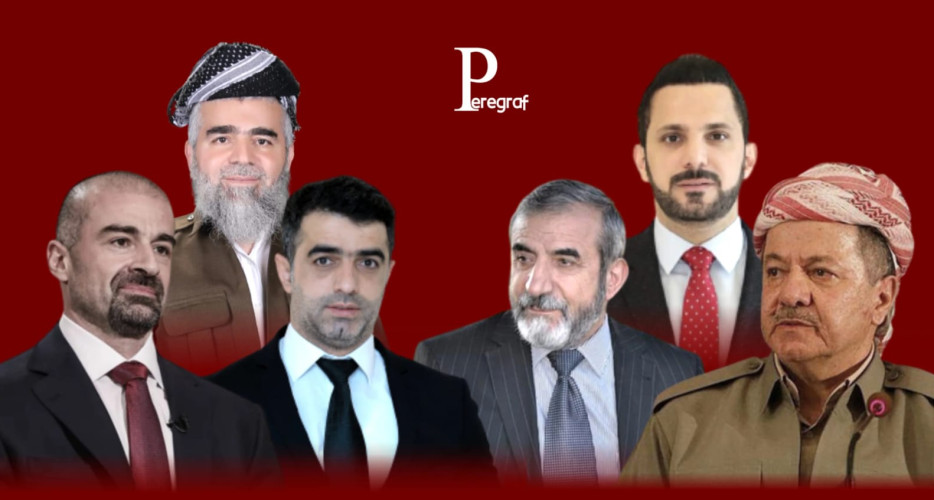
Peregraf – Faced with growing concerns over political fragmentation, Kurdish parties have begun internal efforts to unify their position ahead of negotiations to form Iraq’s new federal government. The Kurdistan Democratic Party (KDP) and the Kurdistan Islamic Union (KIU) have separately launched rounds of visits to the election-winning parties in an attempt to develop a joint roadmap for talks in Baghdad.
The renewed dialogue comes at a moment of heightened tension between the KDP and the Patriotic Union of Kurdistan (PUK). Their rivalry, coupled with a wider lack of coordination among Kurdish forces, has raised alarm about the Region’s ability to defend its rights during government-formation negotiations-particularly as both the Shiite and Sunni blocs have already consolidated their ranks and are preparing to negotiate as unified fronts.
The KIU, which secured four seats in the recent Kurdistan Region election, held meetings on Tuesday in Sulaimani and Erbil with the other five winning Kurdish parties. The party presented a proposed roadmap focused on constitutional rights and core Kurdish demands in Baghdad, delivering it to the KDP, PUK, Halwest (Stance), New Generation (Naway Nwe), and Komal (Kurdistan Justice Group). According to KIU spokesperson Salahaddin Babaker, all parties responded positively and expressed willingness to adopt a unified stance in the federal negotiations.
"We have called for an urgent meeting of the winning parties at the political bureau level to agree on a joint roadmap and form a high-level committee to draft it," Babaker said.
The KIU’s key priorities-salary and budget guarantees, the implementation of Article 140, the Oil and Gas Law, and protection of Peshmerga rights-should be declared "Kurdish red lines," the party insists, making their inclusion a condition for supporting Iraq’s next prime minister.
For the same purpose, the KDP also launched a series of visits today, beginning with the KIU and later meeting Komal. The KDP has repeatedly stressed the need for Kurdish unity, urging all parties to agree on a common roadmap rather than entering Baghdad divided.
Abdulstar Majeed, a member of Komal’s political bureau, said after meeting the KIU delegation that all Kurdish forces must agree on a unified document outlining the constitutional and legal rights of the Kurdistan Region.
"Despite all our observations and criticisms of the KDP and PUK, Kurdish unity in Baghdad is beneficial for the people of Kurdistan, and unity brings more gains. The public also wants this, so we support it," he said.
However, he cautioned that if no consensus is reached with the KDP and PUK, "we will be forced to form an agreement among the other parties and defend our constituencies and our votes."
Six Kurdish parties won a combined 58 seats in the sixth round of Iraq’s parliamentary elections, alongside five quota seats that went to the KDP. Seat distribution among Kurdish parties is as follows: KDP 27 + 5 quota seats, PUK 18, Halwest 5, KIU 4, New Generation 3, and Komal 1.
Meanwhile, the Shiite Coordination Framework has already declared itself the largest parliamentary bloc with more than 170 seats and is preparing to nominate Iraq’s next prime minister. The Sunni forces followed suit days later, uniting more than 70 seats under the newly formed National Political Council to negotiate collectively and secure shared demands.
In contrast, the Kurdish parties remain divided, with no clear agreement yet on whether they will enter negotiations united or fragmented. Observers warn that continued division will significantly weaken the Kurdish bargaining position in Baghdad and undermine the Region’s ability to protect its political and constitutional rights.