KDP Warns Against 'Interference' in Election Results, Says Quota Seats Are a Red Line
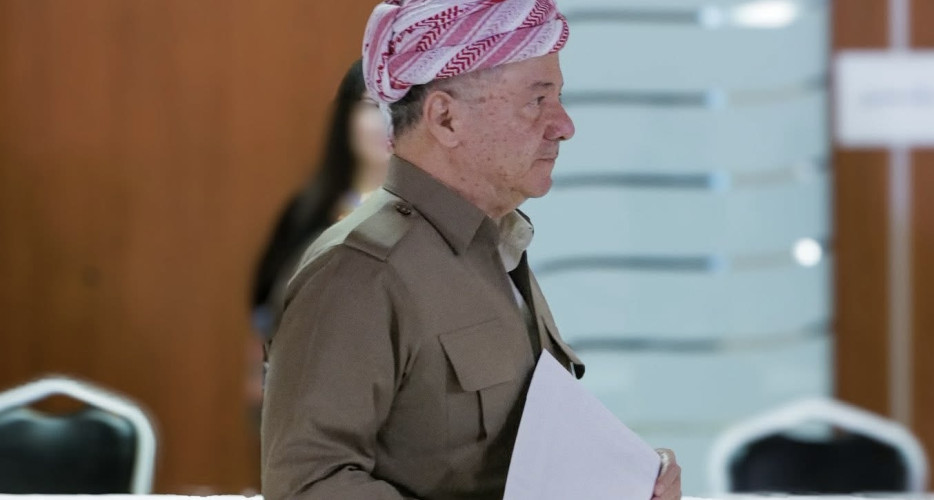
Peregraf- The Kurdistan Democratic Party (KDP) issued a strongly worded statement on Tuesday rejecting what it described as attempts to interfere with the results of Iraq’s recent parliamentary elections, particularly the minority quota seats.
The KDP Political Bureau said it had received reports of efforts to alter outcomes and warned that any such moves would be unacceptable. “Interference and changing the election outcomes in general, and the quotas in particular, are absolutely unacceptable and we consider it a red line,” the statement said.
The party emphasized that the November 11, 2025 parliamentary elections were conducted in a “democratic, free, orderly, and transparent atmosphere,” and that the Independent High Electoral Commission (IHEC) had already finalized results after completing all legal procedures.
The KDP warned that if any institution or political force attempts to alter the announced results, “we will have a serious political stance.”
The warning issued by the KDP Politburo concerns potential tampering with the Christian quota seat in Duhok following the vote recount.
The KDP has exploited the quota seat in Duhok province. Acting on directives, a segment of the party’s supporters voted for a Christian candidate aligned with the KDP, allowing them to wrest the Duhok Christian quota seat from a rival list by a margin of over 700 votes.
KDP Wins Five of Nine Minority Quota Seats
According to the final results of the 2025 Iraqi parliamentary elections, the KDP secured the majority of minority quota seats—winning 5 out of the 9 seats designated for Christian, Yazidi, Shabak, Sabi’a, and Faili Kurdish communities.
The successful KDP-backed quota candidates are:
• Sami Oshana – Christian quota, Dohuk: 22,836 votes
• Kildo Ramzi – Christian quota, Erbil: 18,472 votes
• Imad Yokhana – Christian quota, Kirkuk: 17,602 votes
• Khalid Sido – Yazidi quota, Nineveh: 9,686 votes
• Haidar Ali Mohammad Ali Al-Hammoundi (Haidar Abu Tara) – Faili Kurd quota, Wasit: 17,174 votes
Iraq’s minority quota system does not use a separate voter registry, meaning parties—particularly the KDP and PUK—often mobilize their base to vote for favored quota candidates.
The PUK publicly supported Babylon Movement candidate Atheer Ibrahim in the Dohuk Christian quota race, but the candidate fell short with 22,056 votes, losing to the KDP-backed contender.
In total, nine seats in the 329-member Iraqi Parliament are reserved for minorities: five for Christians (Erbil, Dohuk, Kirkuk, Nineveh, Baghdad), and one each for Yazidis (Nineveh), Shabak (Nineveh), Sabi’a (Baghdad), and Faili Kurds (Wasit).
Kurdistan Region Results: KDP Leads, Opposition Reorders
The broader results from the Kurdistan Region’s four provinces—Erbil, Duhok, Sulaymaniyah, and Halabja—confirm the KDP as the leading party, followed by the PUK. Meanwhile, the Halwest (Stance) Movement overtook New Generation, becoming the largest opposition force. Yakgirtu (Kurdistan Islamic Union) secured a strong third place in several areas.
Of the 46 seats allocated to the Kurdistan Region in the Iraqi Parliament, two are minority quota seats, and the remaining 44 were won as follows:
Erbil – 15 seats
• KDP: 9
• PUK: 3
• Halwest: 2
• New Generation: 1
Sulaymaniyah – 18 seats
• PUK: 8
• Halwest: 3
• New Generation: 2
• KDP: 2
• Yakgirtu: 2
• Komal: 1
Duhok – 11 seats
• KDP: 9
• Yakgirtu: 2
Kurdistan Region total:
• KDP: 20
• PUK: 10
• Halwest: 5
• Yakgirtu: 4
• New Generation: 3
• Komal: 1
Kurdish Bloc Secures 58 Seats in the Iraqi Parliament
At the national level, Kurdish parties collectively won 58 out of 329 seats:
• KDP: 27 (plus 5 quota seats)
• PUK: 18
• Halwest: 5
• Yakgirtu: 4
• New Generation: 3
• Komal: 1
The results reaffirm the PUK and KDP’s dominance within the Kurdistan Region and its significant influence at the federal level—while also setting the stage for possible political tensions if disputes over quota seats escalate.