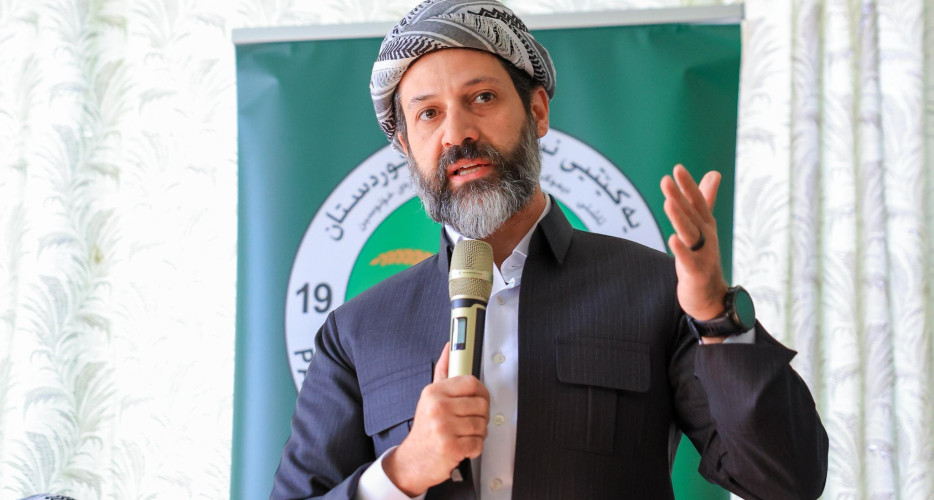
Peregraf- Kurdistan Region Deputy Prime Minister and senior Patriotic Union of Kurdistan (PUK) leader Qubad Talabani said the ongoing public-sector salary crisis remains unresolved, warning that the problem will return before the end of the year.
Speaking during a meeting with PUK cadres in Doli Roste in Erbil governorate as part of the party’s parliamentary election campaign ahead of the Iraqi elections scheduled for November 11, Talabani stated, "The salary problem has not been solved, and what exists has only been patched up. The issue will resurface at the end of this year."
He added that citizens are now calling on PUK President Bafel Talabani to go to Baghdad to secure a solution. "Two years ago, I said the problems between the Kurdistan Region and Baghdad cannot be solved by patching them up. Now, the PUK believes that instead of temporary fixes, all relations must be restructured through a major surgery."
Salary Crisis Persists Despite Oil Agreement
The Kurdistan Region’s salary and budget dispute with the federal government has dragged on for years. A new "understanding" reached in July was expected to normalize payments, yet delays continue. At the end of October, public employees are only now receiving their August salaries.
The Kurdistan Region has about 1.2 million salary earners. The delays have shaken markets, leaving businesses and households under pressure.
Baghdad has conditioned salary transfers on Erbil handing over its oil to Iraq’s SOMO company. After years of talks, Kurdistan’s oil is now exported via SOMO, with revenues deposited into the federal treasury. The matter was discussed again today in a phone call between the Iraqi and Kurdistan Region prime ministers.
Kurdistan’s oil exports were suspended on March 25, 2023, due to disputes between Erbil and Baghdad. After lengthy negotiations involving both governments and international oil companies, exports resumed on September 27, 2025.
Oil from the Kurdistan Region is transported through the pipeline to Faysh Khabur, then to Turkey’s port of Ceyhan. SOMO sells the crude and sends revenues to Baghdad.
SOMO Deputy Director Hamdi Shangali previously said the export agreement is valid until December 31, 2025, and will be renewed by mutual consent of the KRG, the federal government, and oil companies. He stressed exports will not stop.
Tensions over oil rights and budget transfers have persisted since 2014, when the KRG began exporting oil independently. Baghdad responded by cutting the Region’s budget share, leading to years of irregular salaries, cuts, and austerity.
Talabani’s remarks underscore concerns that, despite resumed exports, the deeper political and fiscal disputes between Erbil and Baghdad remain unresolved.