International Conference on Kurdish Genocide Opens in Duhok as Barzani Calls for Global Accountability
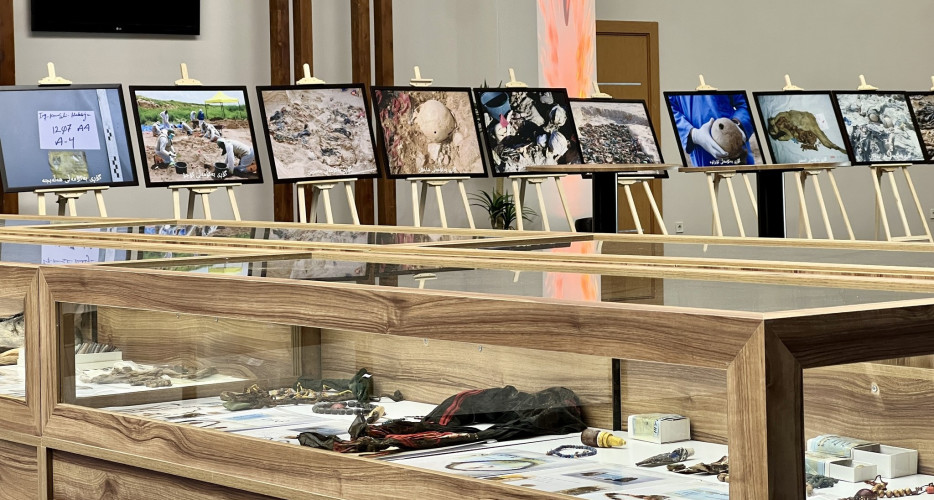
Peregraf- The fifth International Scientific Conference on the Genocide of the Kurdish People opened today, Tuesday, in the city of Duhok, with the attendance of Kurdistan Democratic Party (KDP) President Masoud Barzani. The two-day conference brings together researchers, officials, survivors, and international guests to discuss documentation, justice, and recognition for the Kurdish genocides committed over the past decades.
In his keynote speech, Masoud Barzani reflected on the long history of persecution faced by the Kurdish people, describing their suffering as "systematic and planned" over the past century. He highlighted the mass killings of Faili Kurds, the Anfal campaigns, and the chemical bombardment of Halabja as defining atrocities in Kurdish history.
"The destiny of the people of Kurdistan throughout history has always been pain, suffering, and oppression," Barzani said. "From 1975 to 1980, the genocide began with the Faili Kurds. Thousands were expelled, their properties looted, and 12,000 young men disappeared—no one knows where their graves are to this day."
Barzani recalled the successive crimes committed by Saddam Hussein’s regime, including the 1983 Barzani Anfal, the mass chemical attacks on Kurdish villages in 1987 and 1988, and the March 16, 1988, chemical bombing of Halabja, which he called "the culmination of all crimes." He also referred to the 2014 Yazidi genocide by ISIS as a tragic continuation of Kurdish suffering.
"These crimes are so immense that they will never be forgotten," Barzani stated. "But see the greatness of this nation—the people of Kurdistan did not seek revenge when God granted them power. In the 1991 uprising, two Iraqi army corps fell into Kurdish hands, yet not a single soldier was harmed. These were the same soldiers who destroyed 4,500 villages and carried out the Anfal."
Barzani described the Kurdish people’s restraint and forgiveness as an unparalleled moral example: "The people of Kurdistan taught me and the whole world that lesson. Unfortunately, the value of that stance has not yet been recognized."
The KDP leader emphasized the importance of documenting the crimes for future generations, saying that young Kurds must understand the price paid for their current freedoms. "Freedom was not a gift from anyone; it was achieved through sacrifice," he said.
He called on both the Kurdistan Regional Government (KRG) and the Iraqi federal government to compensate the families of genocide victims, describing compensation as "a moral and symbolic act of justice." He reminded attendees that Iraq’s 2005 constitution—specifically Article 132—obliges the federal government to compensate victims of past repression.
"It is very important that these crimes are recognized as genocide at the international level," Barzani said. He thanked the Iraqi Parliament for its 2008 decision to recognize the Anfal as genocide, as well as Sweden (2012) and the United Kingdom (2013) for passing similar resolutions. He urged other European and international parliaments to do the same.
Barzani expressed hope that the upcoming Iraqi parliamentary elections would pave the way for a political climate based on the constitution rather than "personal whims." He also warned that "the culture that carried out the Anfal still influences some people in Iraq," and called for it to be eradicated once and for all.
The Kurdish leader extended his gratitude to the people of Muthanna and Samawah governorates in southern Iraq for cooperating with Kurdish teams in locating mass graves, and to the experts, including Professor Yassin, who have worked to identify victims and return their remains.
"Until our last breath, we will strive to ensure that not a single bone of our martyrs remains undiscovered," Barzani pledged. "Thousands of greetings to the pure souls of the martyrs."
Between February and September 1988, the Former Iraqi Ba’ath regime displaced and murdered an estimated 182,000 Kurds, destroyed thousands of villages, and carried out mass executions across eight provinces. Sites like Nugra Salman prison became symbols of unspeakable suffering. The 1988 Halabja chemical weapons attack alone killed more than 5,000 civilians and injured thousands more.