Qubad Talabani Says Government Could Be Formed 'In Days' If KDP Applies Its Own Slogan in Kurdistan
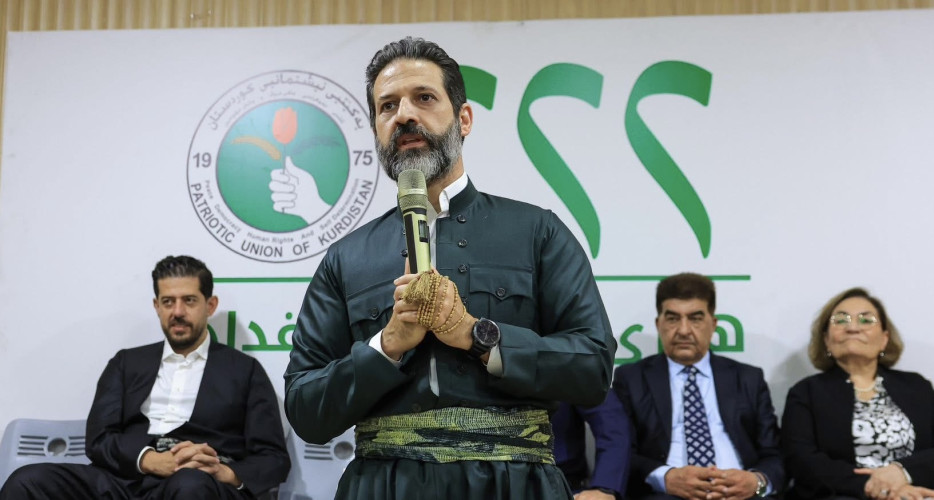
Peregraf- Kurdistan Region’s Deputy Prime Minister and Patriotic Union of Kurdistan (PUK) senior leader, Qubad Talabani, stated today that the Kurdistan Democratic Party (KDP) could help resolve the deadlock in forming a new Kurdistan Regional Government (KRG) cabinet 'within days.' This, he asserted, would be possible if the KDP were to truly implement its campaign slogan of 'partnership, balance, and compatibility' within Kurdistan."
Speaking during his party’s election campaign event in Koya for the upcoming Iraqi parliamentary elections scheduled for November 11, Talabani said the PUK is determined that the next KRG cabinet must be “effective, service-oriented, and just,” based on real partnership.
“The KDP’s slogan in this election is “partnership, balance, and compatibility”. We want the same thing in Kurdistan,” Talabani said. “If the KDP implements this slogan in Kurdistan, a government will be formed in a few days.”
He emphasized that the PUK aims to “fundamentally resolve issues” in Baghdad—especially those related to the budget and salaries—in accordance with the Iraqi Constitution.
Talabani’s remarks come amid an intensifying political standoff between the KDP and PUK that has delayed the formation of the Kurdistan Region’s 10th cabinet for a year.
Just last week, KDP President Masoud Barzani urged the PUK to accept a new proposal for forming the novel cabinet of KRG, describing it as balanced and warning that continued delay serves neither side’s interest.
Speaking at a meeting with religious clerics on October 18, Barzani said, “I hope this issue is concluded before the Iraqi parliamentary elections and that our brothers in the PUK come and form the government with the KDP, because it is neither in the interest of the Kurdistan Region nor in the interest of the wider region.”
Barzani noted that after nearly a year of talks, both parties had already agreed on the main framework of governance within Kurdistan Region. “The offer we have presented has a great deal of balance. I do not believe anything better or more is possible than the offer the KDP has given,” he added.
Meanwhile, PUK President Bafel Talabani struck a tougher tone at a rally in Sulaymaniyah the same day, insisting that his party will not join any KRG cabinet unless it guarantees “real change.”
“A government will never be established in Kurdistan Region until we are certain that it will not repeat the mistakes of the past and will give us the opportunity to serve you,” he told supporters.
Disputes over security posts, particularly control of the Ministry of Interior and the Kurdistan Region Security Council, remain the core of the stalemate. KDP negotiator Dilshad Shahab recently confirmed that his party “will not give the KRG Interior Ministry to the PUK and will not negotiate over it.”
As Peregraf previously reported, more than ten rounds of negotiations have failed to bridge the divide between the two historic rivals. The KDP insists on retaining control of both the Interior Ministry and the Security Council, while the PUK demands one of those posts and a senior executive role to ensure political balance.
These institutions hold significant influence, as the Security Council oversees the Parastin (KDP) and Zanyari (PUK) intelligence agencies—key levers of political and security power in the Kurdistan Region.
At the MERI Forum earlier this month, Kurdistan Region President Nechirvan Barzani acknowledged the slow progress, saying, “We have passed very important stages with the PUK, but I don’t believe the Kurdistan Regional Government cabinet will be formed before the Iraqi parliamentary elections.”
The prolonged deadlock has left the newly elected parliament unable to reconvene since its first session in December 2024. The October 2024 elections produced a fragmented assembly: the KDP holds 42 seats (including minority allies), the PUK 25, New Generation 15, Kurdistan Islamic Union 7, and smaller parties and minorities the remainder.
Together, the KDP and PUK control 67 seats—enough for a governing majority—but their inability to compromise on key security portfolios has left the region without a functioning cabinet for almost a year.
Opposition parties have further complicated the landscape, with Komal boycotting parliament and New Generation setting strict conditions for participation. As a result, a KDP–PUK agreement remains the only viable route to ending Kurdistan’s political paralysis.