PEREGRAF
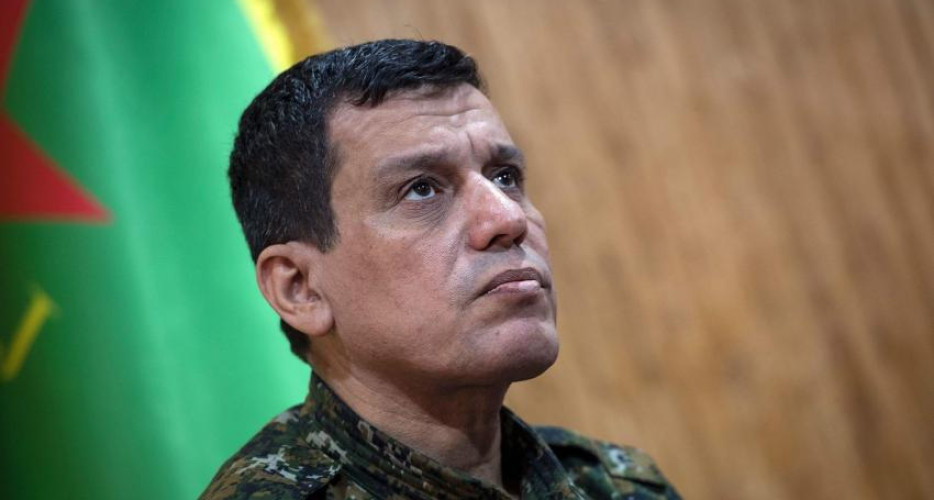
Syrian Democratic Forces (SDF) commander Mazloum Abdi survived an apparent "Turkish drone strike" on April 7 while traveling in a convoy to Sulaimaniyah International Airport. He had been in the city for meetings with officials from the Patriotic Union of Kurdistan (PUK) and the US military.
"After we finished our meetings with our partners in the fight against Islamic State in Sulaimaniyah, we faced a Turkish drone attack in the afternoon when we were returning. The convoy included our US partners and counterterror forces," said Abdi in a video statement.
Abdi accused Turkish President Recep Tayyip Erdogan of trying to win his upcoming election by undermining the SDF’s counterterrorism activities and the relationship with their partners.
“They are trying to win at the expense of Kurdish blood, by targeting Kurds and using them as a card in the election campaign,” said the SDF commander.
The authorities in northeastern Syria, which is also known as Rojava, have close ties with the PUK, the ruling party in Sulaimaniyah. This relationship has worried Ankara, which sees the Kurdish groups that form the backbone of the SDF as a branch of the Kurdistan Workers’ Party (PKK).
Ilham Ahmad, who is co-chair of the Executive Council of the Autonomous Administration of North and East Syria (AANES), was also in Sulaimaniyah for meetings at the time of the drone strike.
A security source told Peregraf on condition of anonymity that “the target was [Abdi], but we believe that it was a warning message designed to create fear, not to kill him. The attack targeted a place near the convoy, not the vehicles themselves.”
Security officials in Sulaimaniyah have expressed a belief that if Abdi’s convoy had not included US officials, "Turkey might have tried to assassinate him".
US Central Command Spokesperson Colonel Joe Buccino characterized the incident an "attack on a convoy" and told reporters that "three Americans were with the convoy, but no one was injured.”
Several weeks before the drone strike, two helicopters carrying members of the SDF special forces from northeastern Syria to Sulaimaniyah crashed in the Duhok governorate due to bad weather. Nine people were killed. This sent off alarm bells in Ankara, which strongly objected to the PUK using helicopters to transport Syrian Kurdish fighters.
Four days before the attack, Turkey closed its airspace to flights to and from Sulaimaniyah for three months, alleging that PKK activities in the city “have increased and infiltrated the airport, which threatens aviation security." However, local officials deny this is the case.
Iraqi officials visited the airport the day after the drone strike, viewing a large crater where the missile hit. The delegation was led by National Security Advisor Qassim al-Araaji.
"After the closure of Turkish airspace to flights to Sulaimaniyah airport, we were expecting other measures and the Iraqi government warned us that other inappropriate steps may be taken," Shalaw Kosrat Rasul, a member of the PUK leadership, told reporters during the visit.
A senior PUK official told Peregraf on condition of anonymity that “Turkey has accused Sulaimaniyah airport of containing a PKK operation room. We want the Iraqi authorities to investigate and reject the accusation and officially condemn Turkey's position."
"Turkey's actions violate Iraqi sovereignty," the PUK official continued, adding that the party was very concerned about how details of Abdi’s visit made it into ‘Turkish hands’.
"The visit was very secret. Only a small number of security and intelligence officials were aware of it. A thorough investigation is being conducted into the leak," the official said.
Peregraf asked US Central Command by email whether they had confirmed that Turkey was behind the attack and whether it was concerned that US military officials had been put in danger. The outlet also asked whether it had any comment on who may be responsible for the leak.
No response had been received as of press time.
PUK leader Bafel Talabani blamed a “local security agency” of collaborating with Turkey in the attack, an apparent reference to the Kurdistan Democratic Party (KDP).
Peregraf tried to get clarity on this apparent accusation, but several PUK sources declined to name the KDP directly.
Even before Talabani’s accusation, the drone strike had become a partisan issue between the Kurdistan Region’s ruling parties.
Just hours after the attack on the convoy, Kurdistan Regional Government (KRG) Spokesperson Jotiyar Adil, who is a member of the KDP, expressed his “deep concern” about the situation, before launching into a partisan attack on the PUK.
“This terrible situation is the result of the occupation of government institutions and their use for illegal activities. The behavior of an authoritarian party regime in Sulaimaniyah led to the closure of Turkish airspace to Sulaimaniyah International Airport and then the attack," Adil said.
PUK roundly denounced the statement; At least ten official statements were issued by officials at every level.
"We would like to explain to the Kurdistani people that Jotiyar Adel is not the spokesman of the KRG and he only represents a party in the government," KRG Deputy Prime Minister Qubad Talabani said.
Adil issued another statement in response to the deputy prime minister’s message. He said that the PUK was “obstructing the affairs of the government and its institutions,” a reference to the Talabani’s decision to boycott cabinet meetings.